Tire shops boom thanks to software few see
Tire shops boom thanks to software few see
Published 2026-06-26 • Price-Quotes Research Lab Analysis
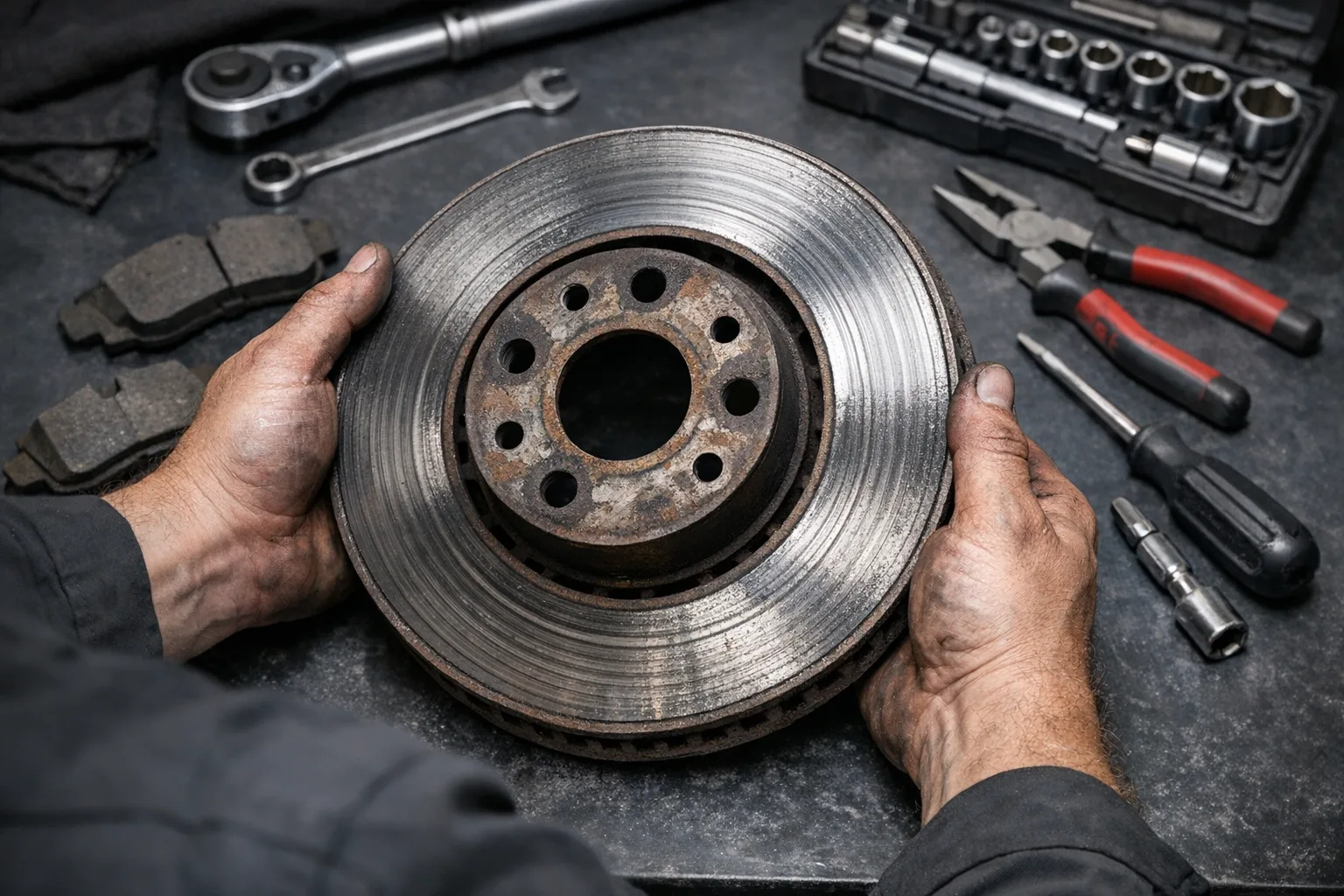
The bell above the door at a small independent tire shop in a mid-sized American city hasn't rung in three weeks. The owner, a second-generation mechanic who inherited the business from his father, sits behind the counter scrolling through his phone. He knows the quality of his work his father built this reputation over thirty years. But the phones aren't ringing the way they used to. A family-owned dealership two miles away just opened a new service bay with a digital sign. A national chain across town runs television commercials during the evening news. And somewhere in the cloud, a potential customer is typing "tire shop near me" into a search bar, scrolling past his unremarkable website listing without a second glance.
This scene plays out in tire shops across the country, where the gap between doing good work and filling a calendar has never been wider. The good news: the tools to close that gap don't require a marketing department or a massive advertising budget. They require understanding how customers actually find and choose a tire shop in 2026 and meeting them there.
The Market That Keeps on Turning
The tire industry operates on a fundamental paradox: quality tires can last several years, meaning a satisfied customer might not return for a long time unless they run over a nail. That reality shapes everything about customer acquisition in this business. According to industry analysis from Podium, the US tire market is one of the largest in the world, bringing in billions each year, with tire shops ranging from small independent operations to big-box retail chains. Wherever a shop falls on that spectrum, the competition is fierce.
The worldwide tire market reached a valuation of USD 245.53 billion in 2022 and is projected to surge to USD 374.51 billion by 2028, according to research published by ColorWhistle, representing a compound annual growth rate of 7.42% throughout that forecast period. That growth means more competition, but it also means more demand and the shops that understand how to capture that demand are the ones that have mastered the art of being found.
"The U.S. automotive aftermarket thrives on constant demand, with tire sales driving a significant portion of its multibillion annual revenue," notes Bilyana Ivanova, a digital PR and social media expert writing for SERPsGrowth. "Whether you run a family-owned garage or manage a multi-location operation, standing out requires more than just quality products it demands smart outreach and genuine connections."
"The U.S. automotive aftermarket thrives on constant demand, with tire sales driving a significant portion of its multibillion annual revenue. Whether you run a family-owned garage or manage a multi-location operation, standing out requires more than just quality products it demands smart outreach and genuine connections."
SERPsGrowth expert analysis on tire shop marketing
Where Customers Actually Look
Most people don't drive around town hunting for a shop when they need new tires, especially if they've got a flat. Instead, they turn to the internet to research nearby businesses. This behavioral reality is the foundation of every effective marketing strategy for tire shops. Online tire marketing increases the chances that these searchers stumble across your shop but only if you understand where your audience tends to look.
Research from SERPsGrowth indicates that over 70% of automotive service customers check multiple websites before booking appointments. Dealerships and national chains have responded by offering free loaner cars, discounted alignments, and aggressive digital ad campaigns. For smaller independent shops, this saturation means your potential clients compare pricing, reviews, and turnaround times before even picking up the phone.
"Modern consumers prioritize convenience and personalized service when choosing where to buy tires," according to the SERPsGrowth analysis. "Combining digital engagement with exceptional in-store experiences drives customer retention."
Understanding this behavior shift is the first step. The second step is being present on the platforms where it happens and doing it better than the competition.
The Local SEO Foundation
For tire shops, local search engine optimization isn't just a marketing tactic it's the engine that drives discovery. Search engine optimization increases the chances that your business shows up when people search for tire services online. It's a cost-effective way to connect with nearby customers without paying for ads, and it starts with understanding how search engines evaluate your presence.
According to WhyOptimize, a marketing firm specializing in automotive and tire industry clients, there are several concrete steps tire shops can take to improve local visibility. First, ensure your website is mobile-friendly and easy to navigate a significant portion of local searches happen on smartphones, and a site that loads slowly or doesn't display properly on mobile devices will lose potential customers immediately.
Second, use terms that your audience actually searches for. Keyword research tools like Moz and Semrush can suggest niche keywords specific to your service area. Include localized SEO keywords such as "tire stores in Denver" or "Chicago flat tire repair" to capture searches with geographic intent.
Third, share helpful content that answers common questions and concerns. Customers may appreciate a series of blog posts comparing different tire brands, explaining tire maintenance basics, or walking through seasonal driving considerations. This type of content serves dual purposes: it provides value to potential customers and it signals to search engines that your website is a relevant resource for tire-related queries.
Earning mentions from other websites also improves local search engine optimization. Try building relationships with complementary local businesses body shops, auto dealerships, car washes and look for opportunities for mutual referrals or co-marketing. These local citations and mentions signal to search engines that your business is a recognized part of the community.
"When you know where your audience tends to look for services, you can be there to greet them," notes the WhyOptimize guide. "For example, college students may look on Instagram, while busy parents head straight to Google."
Building Reputation Beyond Discounts
There's a persistent assumption in the tire industry that customers always go for the cheapest option. Industry experts consistently challenge this assumption. "You may assume that people always go for the cheapest option, but that's not true," according to WhyOptimize. "Customers frequently choose tire shops that are visible and have a good reputation. If you want to win them over, you'll need to do more than offer discounts. You've got to earn their trust."
This insight has profound implications for how tire shops allocate their marketing resources. more than competing solely on price a race to the bottom that erodes margins and devalues expertise successful tire shops compete on visibility and reputation. A consistently good reputation can significantly impact business growth in the tire industry, according to analysis from Podium.
Building that reputation starts with actively soliciting and managing customer reviews. Customer reviews are a powerful tool in the tire shop business because they build trust among potential customers and help improve online presence. Encouraging satisfied customers to leave positive reviews on Google, Yelp, and industry-specific platforms creates a virtuous cycle: more positive reviews lead to better search rankings, which leads to more visibility, which leads to more customers, some of whom will leave their own positive reviews.
Data analytics help tailor promotions and services to meet shifting buyer preferences, according to SERPsGrowth. By paying attention to what customers are saying in reviews both positive and negative shop owners can identify patterns, address weaknesses, and communicate their strengths more effectively.
Social Media That Serves, Not Just Sells
Social media presents an opportunity for tire shops to connect with their community in ways that feel authentic more than transactional. Educational content can help you connect with your target audience in a way that's not overly sales-y, according to Podium. For instance, sharing tire maintenance tips, best practices for seasonal driving, and vehicle safety information positions your shop as an expert resource beyond just another vendor.
The key is consistency and engagement. Acknowledging comments and responding to people in a reasonable timeframe builds relationships with followers. Social media contests and promotions are great ways to gain new followers and get people talking about your brand but they work best when they reinforce the shop's expertise and community involvement beyond simply offering discounts.
Different platforms serve different audiences. Instagram tends to attract younger demographics and visual content before-and-after tire installations, behind-the-scenes glimpses of the shop, short tips videos. Facebook reaches a broader demographic including busy parents and older drivers who may be more likely to need tire services. LinkedIn can be useful for B2B connections with local businesses, fleet operators, and corporate accounts.
Email Campaigns That Keep Customers Coming Back
Email marketing is a relatively low-cost but effective way to reach people en masse, according to Podium. The key is targeting: send campaigns directed at specific customer segments more than blasting generic promotions to your entire list. You can include special offers and promotions to entice people to buy during slower periods or when you need to move inventory.
The most effective email campaigns keep the conversation going to encourage repeat business. After a customer purchases tires, follow up with maintenance reminders when to rotate, when to check pressure, when to consider replacement. This type of value-added communication keeps your shop top of mind and demonstrates ongoing care for the customer's vehicle.
Segmentation matters. A customer who bought all-season tires six months ago has different needs than a customer who bought winter tires. Sending relevant content based on purchase history and vehicle type increases open rates, engagement, and ultimately return visits.
Seasonal Promotions and Community Events
Customers are always looking for the best deals, especially during the tire-changing season, according to Podium's analysis. Offering seasonal tire promotions is a great way to keep customers coming back. You can create limited-time discounts, bundle deals, or free services like tire rotations with new tire purchases.
Designing eye-catching visuals and promoting seasonal tire programs through your website, email campaigns, and social media channels maximizes the impact of these promotions. The goal isn't just to drive a single transaction it's to create an experience that makes customers feel they're getting value and expertise, not just a product.
Beyond promotions, hosting tire safety workshops or webinars is an excellent way to engage and educate your community while subtly promoting your business, according to Podium. These workshops can cover basic tire maintenance, proper inflation, tire rotation schedules, or seasonal tire care tips. Partner with local community centers or organizations to host the workshops, and advertise them through your website, social media, and local flyers to reach a broader audience.
This type of community engagement does double duty: it positions your shop as a trusted local authority, and it creates touchpoints with potential customers who may not have considered your services before.
Mobile Services and the Convenience Premium
In today's fast-paced world, convenience is king. Offering mobile tire services such as tire changes, flat repairs, and maintenance can expand your customer base and set you apart from competitors, according to Podium. Mobile tire services are especially appealing to customers with busy schedules or those who prefer contactless services.
Feature your mobile services prominently on your website and promote them through your marketing channels, highlighting the convenience and value they bring to customers. For fleet operators, apartment dwellers without transportation access, and busy professionals, the ability to get tire service at their location more than having to arrange transportation to a shop can be the deciding factor in choosing your business.
AutoLeap, a shop management software provider, notes that mobile-responsive websites with high-quality images and videos for tire selection, properly categorized, are essential for showcasing inventory and services online. This is particularly relevant for mobile services, where customers need to understand exactly what they're getting without visiting a physical location.
Influencer and Local Business Partnerships
Collaborating with influencers and auto repair shops can extend your reach into new customer segments, according to Podium. Influencers in the automotive space whether local car enthusiasts, automotive YouTubers, or community figures with engaged followings can provide authentic endorsements that feel more credible than traditional advertising.
The key is alignment. An influencer whose audience matches your target demographic someone who talks about car maintenance, road trips, or daily driving challenges will generate more relevant leads than a celebrity with a generic following. Micro-influencers with smaller but highly engaged local followings can be particularly effective for tire shops targeting specific geographic areas.
Aligning with other local businesses like body shops and auto dealerships helps each partner market to the other's customers. "This is a great way to make the most of a modest budget and not risk spending too much on something that might flop," according to Podium. These partnerships can include referral arrangements, co-branded promotions, or simply cross-promoting each other's services on social media.
Digital Promotions and Paid Advertising
Pay-per-click advertising like Google Ads allows you to use specific keywords to reach your intended audience, according to Podium. Social media channels like Facebook and Instagram can also accomplish the same goal through targeted ad campaigns. Playing with ad campaigns on these platforms can amplify your message to precisely defined demographics.
For tire shops with limited budgets, paid advertising works best when it's highly targeted and tied to specific promotions or seasonal offers. more than running constant awareness campaigns, time your paid spend to coincide with peak demand periods the onset of winter driving season, spring road trip season, or when you have a specific promotion to highlight.
The goal of paid advertising isn't to replace organic discovery it's to supplement it during key periods when you want to capture demand that's already there. A well-optimized Google Ads campaign, combined with a strong organic local SEO foundation, creates multiple pathways for customers to find your shop.
What This Means for Tire Shop Auto-Text Readers
For independent tire shop owners reading this, the message is clear: you don't need a massive advertising budget to compete with national chains and dealerships. What you need is a strategic approach to local visibility, reputation management, and community engagement that puts your shop in front of customers at the moments they're searching for services like yours.
The strategies outlined here local SEO, educational content, seasonal promotions, mobile services, community workshops, email campaigns, and review management are not exotic tactics reserved for large corporations. They're practical, implementable approaches that any tire shop can adopt, regardless of size or budget. The key is consistency: showing up in the places your customers look, providing value beyond the transaction, and building trust through every interaction.
Your tires can last for many years, and your customers may not need you again for a while unless they run over a nail. But the customers you attract today through smart, value-driven marketing will remember your shop when that nail finds them. They'll tell their friends, leave positive reviews, and become the loyal following that sustains your business through seasonal fluctuations and competitive pressure.
Building a Sustainable Acquisition System
Effective tire shop marketing isn't about finding one magic tactic that drives instant results. It's about building a system of complementary strategies that work together to create consistent customer flow. Local SEO provides the foundation ensuring your shop appears when customers search. Content marketing and social media engagement build trust and demonstrate expertise. Email campaigns and seasonal promotions keep existing customers engaged between visits. Community events and mobile services differentiate your shop from competitors who offer only transactional service.
Each element reinforces the others. A customer who finds you through local search and reads your blog posts about tire maintenance is more likely to trust your expertise. A customer who visits your shop and receives excellent service is more likely to leave a positive review, which improves your search ranking, which brings in the next customer. The system feeds itself.
For shop owners who feel overwhelmed by the prospect of implementing all these strategies, the advice is simple: start with one or two tactics that fit your current capacity, execute them consistently, and expand as you see results. You don't need to do everything at once. You need to do something, and keep doing it.
Where to Read Further
For more detailed guidance on implementing these strategies, the following resources offer in-depth analysis of tire shop marketing approaches:
- WhyOptimize's guide to tire shop advertising ideas provides practical steps for local visibility and reputation building.
- Podium's 13 effective tire marketing strategies covers digital promotions, social media, and customer engagement in detail.
- SERPsGrowth expert analysis on tire shop marketing offers data on consumer behavior and competitive dynamics in the automotive aftermarket.
- AutoLeap's tire shop marketing strategy guide provides insights on optimizing online presence and digital tools.
- ColorWhistle's innovative marketing strategies for the tire industry explores emerging technologies and digital integration approaches.
Summary: Key Strategies for Tire Shop Customer Acquisition
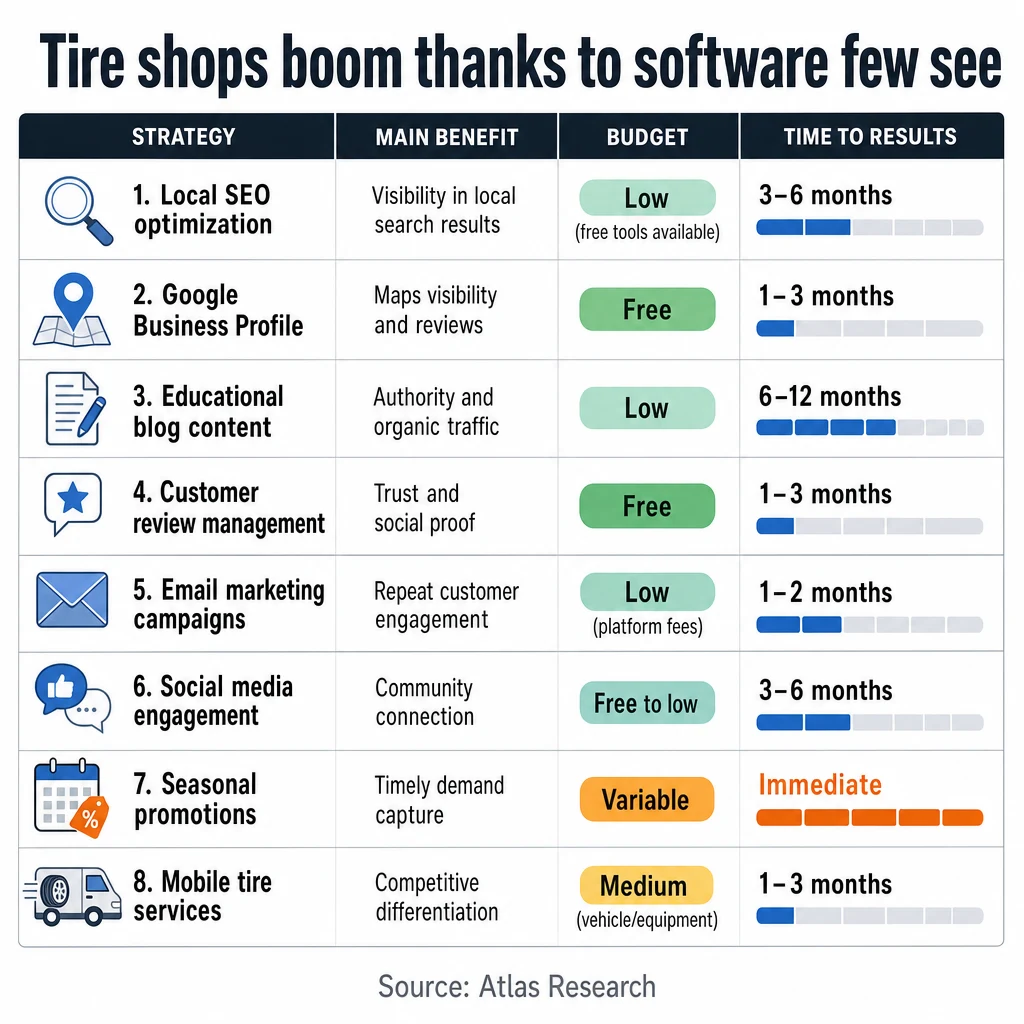
| Strategy | Primary Benefit | Budget Level | Time to Results |
|---|---|---|---|
| Local SEO optimization | Visibility in local search results | Low (free tools available) | 3-6 months |
| Google Business Profile | Maps visibility and reviews | Free | 1-3 months |
| Educational blog content | Authority and organic traffic | Low | 6-12 months |
| Customer review management | Trust and social proof | Free | 1-3 months |
| Email marketing campaigns | Repeat customer engagement | Low (platform fees) | 1-2 months |
| Social media engagement | Community connection | Free to low | 3-6 months |
| Seasonal promotions | Timely demand capture | Variable | Immediate |
| Mobile tire services | Competitive differentiation | Medium (vehicle/equipment) | 1-3 months |
| Community workshops | Local authority building | Low | 3-6 months |
| Local business partnerships | Referral network development | Free | 3-6 months |
The tire shop owner scrolling through his phone at the beginning of this story has more options than he might realize. The strategies that fill his calendar aren't locked behind a massive advertising budget or a corporate marketing team. They're available to any shop willing to invest time in being found, building trust, and serving its community with consistency and care. The bell above the door can ring again it just takes understanding where to show up, and how to make the visit worth the customer's while.
Key Questions
How do tire shops attract new customers without spending money on advertising?
What is the most important factor in tire shop customer acquisition?
How can a tire shop build customer loyalty?
Are seasonal promotions effective for tire shops?
What role does mobile tire service play in customer acquisition?
Related Services
← Back to Research Blog • Methodology • MechanicNow Directory