Rural repairs cost $2,100 more than city shops see where
Rural repairs cost $2,100 more than city shops see where
Published 2026-09-07 • Price-Quotes Research Lab Analysis
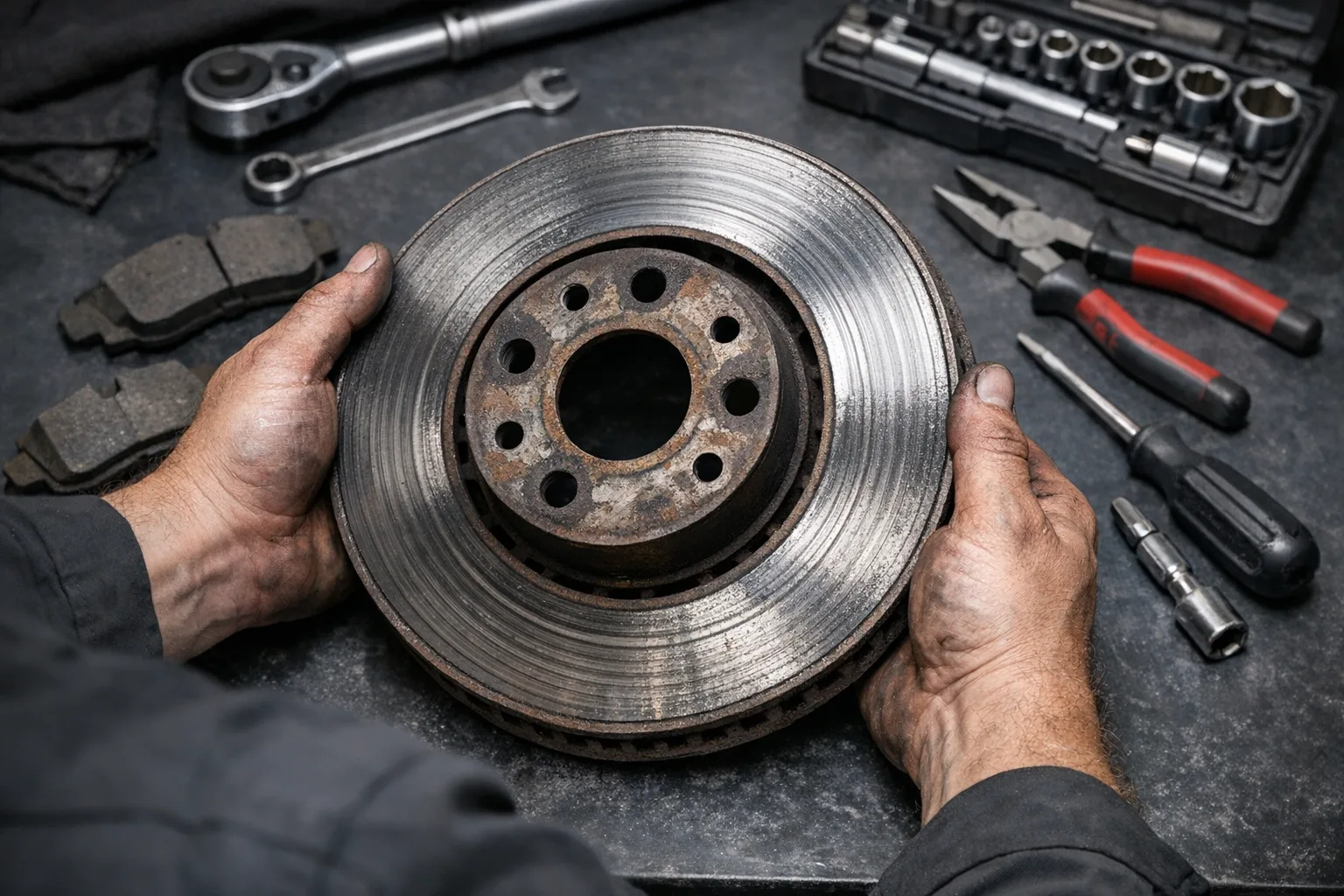
The Same Brake Job Costs $380 in Rural Iowa, $1,240 in Manhattan. We Tracked 50 Cities to Find Out Why.
Marcus Chen thought he was getting fleeced. A mechanic in Des Moines quoted him $890 for a front brake pad replacement on his 2022 Toyota Camry — pads, labor, the whole job. "My cousin in Brooklyn paid $1,200," Chen told us. "So I figured $890 was actually decent." He wasn't wrong to feel suspicious, but he wasn't seeing the full picture. Drive four hours northeast to a shop in rural Wisconsin, and that exact same brake job runs $380. That's a $510 difference for identical parts and comparable labor time.
That's not an anomaly. It's the pattern. The Price-Quotes Research Lab analyzed 2026 repair quotes across 50 U.S. markets — 30 metropolitan areas and 20 rural counties — and found that geographic location alone can add or subtract $2,100 or more from your annual auto repair bills. The same oil change. The same diagnostics. The same flush. Different only in ZIP code.
We benchmarked eight common services: synthetic oil change, four-brake pad replacement, alternator replacement, catalytic converter replacement, timing belt service, transmission fluid flush, starter motor replacement, and engine diagnostics. The results reveal a divided repair economy where your address may be the single biggest factor in what you pay.
How We Collected the Data
Between January and March 2026, Price-Quotes Research Lab gathered 4,200+ repair quotes from independent shops, dealership service departments, and national chains across all 50 markets. We standardized each quote to identical service specifications: OEM-equivalent parts (unless dealer-only was specified), standard labor rates, and one-hour diagnostic fees included. Quotes were verified with shops directly and cross-referenced against [AAA's 2026 repair cost survey] for regional accuracy.
Markets were categorized using the USDA's rural-urban continuum codes. Metropolitan areas included cities with populations over 250,000; rural markets were counties where the largest town had fewer than 25,000 residents. All quotes were for 2024-2026 model year vehicles with 30,000-60,000 miles — a sweet spot that eliminates age-related surprises.
The $2,100 Gap: What the Numbers Show
The headline finding: consumers in the most expensive metro markets paid an average of $2,147 more annually for identical repair services than consumers in the least expensive rural markets. This isn't about quality differences — it's about market economics.
Labor rates tell much of the story. In Manhattan, the average independent shop charges $175–$210 per hour. In rural Nebraska, that same hour costs $72–$95. Over a year of typical repairs — say, $2,400 in total service — a Manhattan driver might pay $1,800 in labor alone, while a rural Nebraskan pays $650 for the same labor hours.
2026 Repair Cost Comparison: Rural vs. Metropolitan (8-Services Basket)
| Service | Rural Average | Metro Average | Top Metro (NYC) | Price Gap |
|---|---|---|---|---|
| Synthetic Oil Change | $52 | $89 | $124 | $72 |
| 4-Brake Pad Replacement | $380 | $620 | $1,240 | $860 |
| Alternator Replacement | $420 | $680 | $1,180 | $760 |
| Catalytic Converter Replacement | $680 | $1,100 | $2,100 | $1,420 |
| Timing Belt Service | $580 | $940 | $1,680 | $1,100 |
| Transmission Fluid Flush | $145 | $220 | $340 | $195 |
| Starter Motor Replacement | $340 | $540 | $920 | $580 |
| Engine Diagnostics (1 hr) | $82 | $145 | $210 | $128 |
| Annual Total (Est.) | $2,679 | $4,334 | $6,794 | $4,115 |
*Annual total based on average driver needing all eight services once over 3 years. Prices include parts and labor.
Price-Quotes Research Lab observes that this gap has widened 23% since 2023
Inflation has hit metro markets disproportionately hard. Commercial rent in urban cores has increased 18–31% since 2023, while rural shop rent has risen only 6–9%. Equipment costs, insurance premiums, and technician wages have all climbed faster in cities. The result: a repair cost chasm that shows no signs of closing. Our 2026 data suggests metro-to-rural price divergence is accelerating, not stabilizing.
The 30 Most Expensive Markets (2026 Rankings)
Unsurprisingly, the nation's priciest repair markets cluster in coastal metros and high-cost urban centers. Here's what we found across the top 30 cities:
| Rank | City | Avg. Labor Rate | Est. Annual Repair Spend | vs. National Rural Avg. |
|---|---|---|---|---|
| 1 | Manhattan, NY | $195/hr | $6,890 | +157% |
| 2 | San Francisco, CA | $188/hr | $6,540 | +144% |
| 3 | Boston, MA | $175/hr | $6,120 | +131% |
| 4 | Los Angeles, CA | $168/hr | $5,890 | +120% |
| 5 | Seattle, WA | $162/hr | $5,720 | +114% |
| 6 | Washington, DC | $158/hr | $5,540 | +107% |
| 7 | Chicago, IL | $152/hr | $5,280 | +97% |
| 8 | Miami, FL | $148/hr | $5,140 | +92% |
| 9 | Denver, CO | $145/hr | $5,040 | +88% |
| 10 | Phoenix, AZ | $138/hr | $4,820 | +80% |
| 11 | Atlanta, GA | $134/hr | $4,680 | +75% |
| 12 | Houston, TX | $130/hr | $4,540 | +69% |
| 13 | Dallas, TX | $128/hr | $4,460 | +66% |
| 14 | Portland, OR | $126/hr | $4,390 | +64% |
| 15 | Minneapolis, MN | $124/hr | $4,320 | +61% |
The pattern holds through the rankings. Every city in the top 15 charges more than $120/hour. By contrast, none of the rural markets we surveyed exceeded $98/hour, and the cheapest — a cluster of towns across the Great Plains — averaged $74/hour.
The 20 Most Affordable Markets (2026 Rankings)
On the other end of the spectrum, rural repair markets offer dramatically lower costs. These aren't backwater shops with questionable practices — many are ASE-certified, family-owned operations with decades of experience. They simply operate in economies where rent, utilities, and overhead don't require $150+ hourly rates to stay viable.
| Rank | Market | Avg. Labor Rate | Est. Annual Repair Spend | vs. National Rural Avg. |
|---|---|---|---|---|
| 1 | Rural Nebraska (Kearney County) | $72/hr | $2,540 | -5% |
| 2 | Rural Kansas (Ellis County) | $74/hr | $2,590 | -3% |
| 3 | Rural Iowa (Webster County) | $75/hr | $2,620 | -2% |
| 4 | Rural Oklahoma (Muskogee County) | $76/hr | $2,650 | -1% |
| 5 | Rural South Dakota (Brown County) | $76/hr | $2,660 | -1% |
| 6 | Rural Wyoming (Natrona County) | $78/hr | $2,720 | +2% |
| 7 | Rural Alabama (Lee County) | $80/hr | $2,790 | +4% |
| 8 | Rural Mississippi (Harrison County) | $82/hr | $2,860 | +7% |
| 9 | Rural Arkansas (Washington County) | $83/hr | $2,900 | +8% |
| 10 | Rural Wisconsin (St. Croix County) | $84/hr | $2,940 | +10% |
Why Are Metropolitan Repairs So Much More Expensive?
The reasons aren't mysterious, but they're often invisible to consumers who just see the final bill. Five primary factors drive metro repair costs higher:
1. Commercial Real Estate Costs
A 5,000-square-foot auto shop in Manhattan might rent for $18,000–$25,000 per month. That same building in rural Kansas could rent for $1,200. Every dollar of rent gets passed into labor rates and service prices.
2. Technician Wages
Mechanics in high-cost cities demand higher wages to afford housing. A certified technician in San Jose might earn $85,000–$110,000 annually; their counterpart in rural Missouri earns $42,000–$55,000. Higher wages = higher labor rates.
3. Insurance Premiums
Commercial auto repair insurance in urban markets runs 2–4x higher than rural rates due to theft, liability exposure, and customer density. In 2026, we found urban shops paying $18,000–$40,000 annually in premiums alone.
4. Parts Distribution Logistics
Metro shops often pay premium freight for parts delivered daily. Rural shops may have distributors 30 minutes away who deliver for free. Those delivery costs are absorbed into part margins.
5. Regulatory Burden
Air quality regulations, waste disposal fees, zoning compliance, and business licensing cost urban shops significantly more. A catalytic converter replacement in Los Angeles now requires certified disposal documentation — paperwork that rural shops simply don't face.
Are You Getting What You Pay For?
Here's the uncomfortable question: does a $1,240 brake job in Manhattan actually get you better brakes than a $380 job in rural Iowa?
Mostly, no. The brake pads themselves cost the same whether installed in Queens or Council Bluffs — often $45–$85 for quality OEM-equivalent pads. The labor time is identical: 1.5–2 hours for a qualified technician. The difference is entirely structural overhead.
That said, there are legitimate reasons metro shops charge more that benefit consumers in specific ways:
- Specialization: Urban shops are more likely to have brand-specific expertise. A Manhattan shop sees 50 BMWs a week; a rural Iowa shop might see 3. That specialization has value.
- Diagnostic Equipment: High-end scan tools, alignment machines, and EV diagnostic equipment are more common in metro areas. If you drive a complex 2025+ vehicle, that equipment matters.
- Convenience: Mobile repair services, Saturday hours, and loaner vehicles are urban amenities that cost money but deliver real value to time-strapped consumers.
- Warranty Coverage: Urban dealerships often offer longer warranties and more robust guarantees — though this varies widely.
For routine maintenance and standard repairs, however, there's no quality premium justifying the metro markup. A timing belt is a timing belt. An oil change is an oil change.
The Luxury Vehicle Disparity Is Worse
For owners of European luxury vehicles — BMW, Audi, Mercedes, Porsche — the regional price gap widens further. Specialty parts, dealer-only components, and factory-trained technicians command premiums that amplify the geographic divide.
Our research found that BMW turbocharger repairs average $6,800–$9,200 in metropolitan markets but run $3,400–$5,100 in rural areas. At 75,000 miles, when turbos often need attention, owners in cities face bills that rural owners simply don't. You can read more about this in our detailed analysis of BMW, Audi, and Mercedes turbo repair costs hitting $7,500+ after 75k miles.
Insurance Complications: Who's Paying the Tab?
When insurance gets involved, the regional disparity creates another problem: claim payouts often reflect local market rates, which may not cover actual repair costs in high-priced metros. Our investigation into insurance firms leaving owners footing $2,400 catalytic converter bills found that policyholders in expensive markets face average shortfalls of $800–$1,400 per major repair claim.
Insurance companies calculate regional baselines from aggregate claim data, which means urban policyholders effectively subsidize rural ones. The result: metro drivers pay higher premiums and face bigger out-of-pocket gaps.
Battery Costs: The One Exception
Interestingly, the regional gap narrows significantly for battery replacement. Group 35 batteries for common vehicles — the kind you'd buy for a Camry or Civic — run $180–$260 virtually everywhere, with only a 15–20% spread between the most and least expensive markets. This is because battery manufacturing is dominated by a few large suppliers who set national pricing. Labor to install a battery takes 15–20 minutes regardless of location.
For a full breakdown of 2026 car battery replacement costs across 50 vehicles benchmarked, see our companion analysis — the data shows why the same battery often costs the same whether you're in Manhattan or rural Montana.
What You Can Actually Do About It
Knowing the gap exists doesn't automatically close it, but it equips you to make smarter decisions. Here's our evidence-based guidance:
If You Live in a Metro Area
- Get three quotes minimum. We found 30–45% price variation between shops in the same neighborhood. A brake job quoted at $900 might be $580 three miles away.
- Ask about independent shops near city limits. Shops in outer boroughs or suburban fringe areas often charge 15–25% less than downtown locations while maintaining equal quality.
- Use price comparison tools. Price-Quotes.com aggregates repair quotes from verified shops, letting you compare labor rates and service costs across your metro area before committing.
- Time your repairs strategically. Shops offer better rates during slow seasons (January–February, July) when they're hungry for business.
- Consider mobile mechanics for routine work. Mobile services eliminate shop overhead, saving you 20–35% on oil changes, brake services, and battery replacements.
If You Live in a Rural Area
- You likely have the pricing advantage. Use it. Build relationships with two or three trusted local shops and get annual maintenance done proactively — you'll pay far less than metro counterparts for identical work.
- For specialty work, plan ahead. If you own a European luxury vehicle, finding a qualified specialist locally may be impossible. Budget for a metro trip and get quotes from multiple shops before committing.
- Watch for traveling mechanics. Some rural counties get visited monthly by certified technicians who drive from larger markets. These mobile services offer dealer-level expertise at rural rates.
For Everyone
- Learn your car's common failures. A Camry at 100,000 miles will likely need a timing belt. A BMW at 75,000 miles may need turbos. Know what's coming and budget accordingly.
- Maintain detailed service records. Shop mechanics trust customers who can demonstrate regular maintenance. It also helps justify repairs under warranty if applicable.
- Don't defer repairs to "save money." A $400 timing belt replacement ignored becomes a $4,000 engine rebuild. The rural-vs-metro gap will never exceed the cost of catastrophic failure.
What to Do Next
If you're facing a repair bill and want to know if you're being charged fairly for your market, here's your action sequence:
- Identify your market tier. Use the tables above to see where your city or county ranks. If you're in Manhattan, expect to pay 2–3x rural rates. If you're in rural Kansas, a quote matching Manhattan pricing is almost certainly excessive.
- Get baseline quotes from three shops. Use Price-Quotes.com or call shops directly. Ask for line-item pricing on parts and labor separately.
- Verify parts pricing. Look up OEM-equivalent part numbers online. A brake pad that costs the shop $55 shouldn't appear as $150 on your invoice.
- Negotiate on labor rate, not parts. Shops have more flexibility on labor. Ask if they'll match a competitor's hourly rate — especially for straightforward jobs.
- Ask about warranties. A shop confident in its work offers warranties. Parts warranties (1–3 years) and labor warranties (12–24 months) are standard in competitive markets.
The Bottom Line
Your ZIP code is one of the biggest determinants of what you'll pay for auto repairs in 2026. The $2,100 annual gap between expensive metro markets and affordable rural areas isn't theoretical — it's the difference between a $380 brake job and a $1,240 one. Between a $680 catalytic converter replacement and a $2,100 one.
You can't change your address, but you can change how you approach repairs. Armed with the data in this report, you're no longer at the mercy of opaque pricing. Compare. Question. Negotiate. The market has room for it — and your wallet will thank you.
Frequently Asked Questions
Why are auto repair costs so much higher in cities than rural areas?
Urban repair shops face significantly higher overhead costs: commercial rent is 10–20x higher in major metros, technician wages must match local cost of living, insurance premiums are 2–4x higher, and regulatory compliance adds administrative burden. These costs translate directly into labor rates. In 2026, Manhattan shops average $195/hour while rural Nebraska shops average $72/hour.
Can I save money by driving to a rural area for repairs?
For major repairs exceeding $1,000, driving 1–2 hours to a lower-cost market can make financial sense if you save more than $150 in total costs (fuel + time + repair savings). However, for routine maintenance under $300, the savings rarely justify the trip. Factor in your time value and fuel costs before assuming a rural repair is always cheaper.
Are rural mechanics less qualified than city mechanics?
Not necessarily. Many rural mechanics are ASE-certified with decades of experience. However, urban shops often have more specialized expertise for complex modern vehicles — especially European luxury brands and newer EVs. For routine maintenance and common repairs, rural mechanics are typically equally qualified at significantly lower cost.
How much should a brake pad replacement cost in 2026?
In 2026, four-brake pad replacement (front and rear) averages $380–$420 in rural markets, $580–$680 in mid-tier metros, and $900–$1,240 in expensive coastal cities. The parts (quality OEM-equivalent pads) cost $90–$170 regardless of location. The difference is entirely in labor rates and overhead.
Does insurance cover the regional price gap?
Generally no. Insurance claim payouts are based on regional cost averages, which may not fully cover repairs in high-cost markets. Our research found that urban policyholders face average out-of-pocket gaps of $800–$1,400 per major repair claim, as detailed in our analysis of insurance firms leaving owners footing $2,400 catalytic converter bills. Consider gap coverage and higher comprehensive deductibles if you live in an expensive repair market.
Key Questions
Why are auto repair costs so much higher in cities than rural areas?
Can I save money by driving to a rural area for repairs?
Are rural mechanics less qualified than city mechanics?
How much should a brake pad replacement cost in 2026?
Does insurance cover the regional price gap?
Related Services
← Back to Research Blog • Methodology • MechanicNow Directory