The Real Cost of Check Engine Light Diagnostics: When to Go to the Dealer vs Independent Shop
The Real Cost of Check Engine Light Diagnostics: When to Go to the Dealer vs Independent Shop
Published 2026-04-10 • Price-Quotes Research Lab Analysis
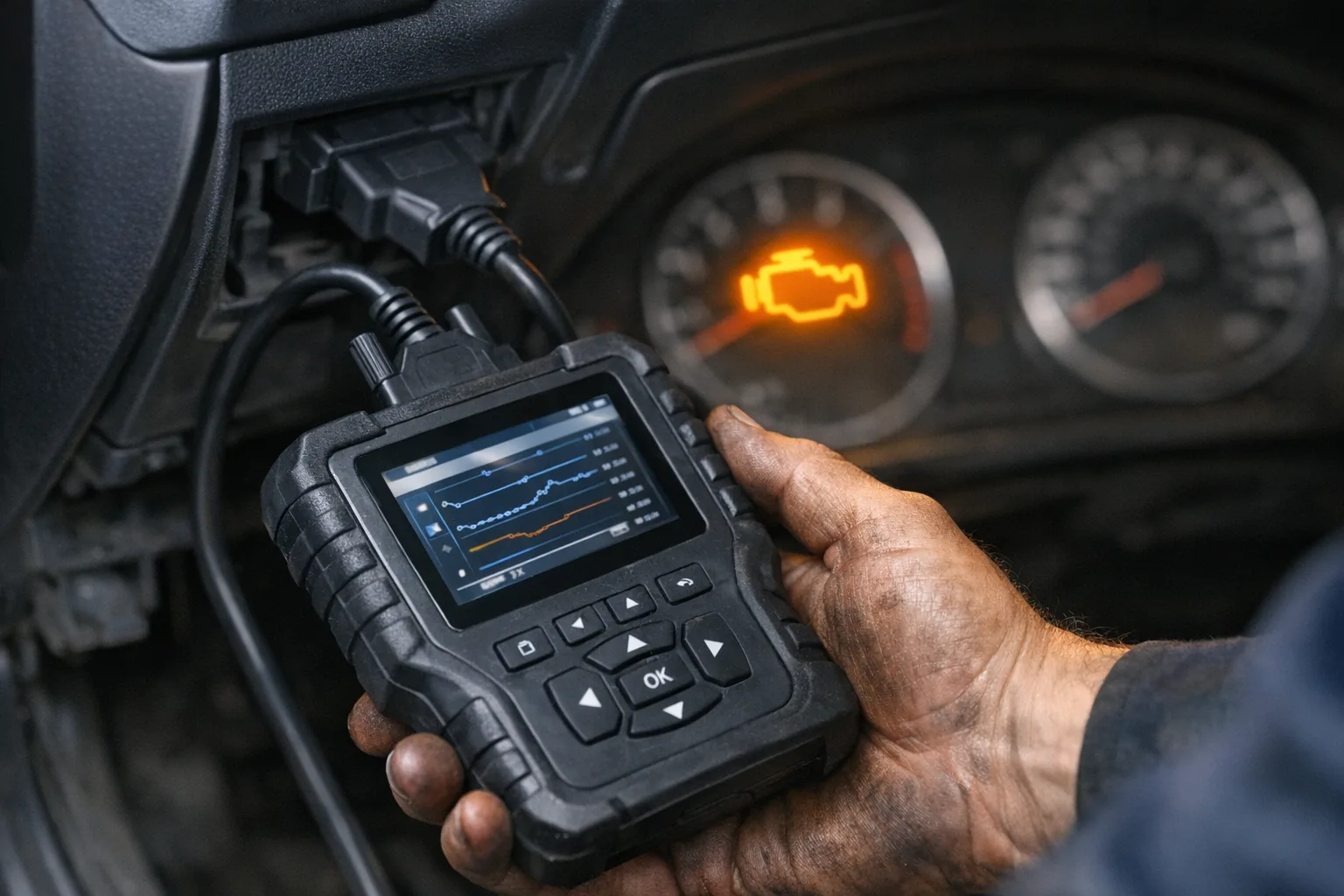
The $47 Truth About Your Check Engine Light
Here's a number that will make you reconsider that dealership service visit: independent mechanics charge roughly 20 to 30 percent less than dealerships for the exact same check engine light diagnostic scan. That gap represents real money slipping out of your pocket every time you default to the dealer out of habit or blind trust. According to Price-Quotes Research Lab analysis of 2026 pricing data across major markets, the average diagnostic at an independent shop runs $50 to $120—while the same procedure at a franchised dealership easily hits $130 to $170 before anyone even touches a wrench.
That premium isn't always justified. Sometimes it absolutely is. This guide cuts through the noise to show you exactly what diagnostics cost, where you're overpaying, and precisely when the dealer markup actually delivers value worth its weight in gold.
If your check engine light just illuminated and you're staring at your dashboard wondering whether to panic or shrug it off, breathe. We'll walk through costs, options, and the strategic calculus that separates savers from suckers at the service bay.
What Triggers the Check Engine Light (And Why Your Wallet Cares)
The check engine light isn't one thing—it's a gateway to hundreds of potential issues. Your vehicle's Engine Control Unit (ECU) runs continuous diagnostics on everything from emissions systems to oxygen sensors, and when something trips a threshold, that amber beacon fires. The causes range from trivially cheap to jaw-droppingly expensive.
Common culprits include:
- Loose or failing gas cap — Often triggers the light, costs $5 to $20 to fix. Yes, seriously.
- Oxygen sensor malfunction — Typically $200 to $500 to replace, but the diagnostic helps pinpoint which of the four sensors is failing.
- Catalytic converter failure — The nightmare scenario, often $1,000 to $3,500 depending on your vehicle. The diagnostic tells you whether you have a real problem or just downstream effects from an earlier failure.
- Mass airflow sensor issues — Runs $200 to $400 to replace.
- Ignition coil problems — $100 to $300 per coil, and many engines have four or more.
The diagnostic scan doesn't fix any of these—it simply tells you which fire to put out first. That information alone can save you from replacing parts you don't need, which makes the cost of diagnosis one of the most valuable dollars you'll spend in vehicle ownership.
The 2026 Diagnostic Cost Breakdown
Let's be specific. The current market breaks down into distinct tiers, and understanding where each option sits helps you make strategic decisions rather than defaulting to whoever's nearest.
Free Code Scans: Auto Parts Stores
Major auto parts chains including AutoZone, O'Reilly Auto Parts, and Advance Auto Parts offer complimentary OBD2 code readings. You drive in, a staff member connects a scanner to your vehicle's diagnostic port (usually located under the dashboard), and within minutes you have a set of trouble codes.
This is genuinely useful. The codes won't tell you the full story—they're breadcrumbs, not conclusions—but they give you a starting point. If the code points to a loose gas cap, you can fix it yourself for five bucks and reset the light for free. If the code points to a catalytic converter, now you have ammunition to get estimates from mechanics with full knowledge of the problem.
The catch: these scans read codes but don't perform full system diagnostics. The parts store employee isn't analyzing your vehicle's fuel trims, checking for multiple overlapping failures, or running live data comparisons. You get the surface layer.
Independent Mechanics and Auto Shops
Most independent repair shops charge $50 to $150 for a check engine light diagnostic in 2026, according to aggregated data from EngineLightFixers and Reeves Service. The variation depends on whether you're getting a basic code read (cheaper) or a comprehensive diagnostic that includes road testing, live data analysis, and component-by-component verification (more expensive).
At this tier, you're paying for technician expertise, not just scanner access. A skilled mechanic reads the codes in context, considers vehicle-specific patterns, and determines whether the code points to a root cause or a symptom of something else happening deeper in the system.
Price-Quotes Research Lab findings show that independent shops in metropolitan areas often charge at the lower end ($50 to $80) for basic diagnostics to stay competitive with parts store free scans, while shops with specialized certifications or dealer-grade equipment push toward the higher end. Either way, this represents the sweet spot of cost versus diagnostic value.
Dealerships
Here's where the 20 to 30 percent premium kicks in with a vengeance. Dealerships charge $130 to $170 or more for the same diagnostic procedure you'd get at an independent shop for $100. Ecostify's 2026 analysis confirms this gap has widened slightly as dealers invest in proprietary diagnostic software and manufacturer-specific scan tools.
Is the extra cost justified? Sometimes. Dealerships have direct access to manufacturer technical service bulletins, brand-specific diagnostic trees, and factory training that independent shops may lack. For obscure issues on late-model vehicles—particularly European luxury brands or vehicles still under factory warranty—the dealer advantage is real.
But for straightforward check engine light diagnosis on common domestic or Asian vehicles? The independent shop wins on pure economics, and their diagnostic accuracy is often comparable or identical.
Mobile Mechanics
The mobile mechanic market has exploded in recent years, and many offer competitive diagnostic rates ranging from $60 to $120 plus a house call fee of $25 to $75. Airtasker's 2025 cost survey found median rates of $210 for full diagnostic services, but mobile options bring that down when you factor in convenience pricing.
The advantage: they come to you. The disadvantage: their diagnostic equipment may be limited compared to a full shop setup. For simple to moderately complex issues, mobile mechanics work well. For diagnostics requiring dynamometer testing or extended road testing, you want a shop with proper facilities.
When the Diagnostic Cost Spirals Beyond the Base Rate
Here's where car owners get blindsided. The initial diagnostic might be $89, but then the mechanic calls you with news: the trouble code points to a malfunctioning oxygen sensor, but the sensor itself is buried under the intake manifold, and accessing it requires removing three other components first.
That scenario can add $50 to $200 to your diagnostic bill as the mechanic spends additional time on disassembly and inspection. RepairPal's estimator notes that complex diagnostics involving multiple systems or difficult-to-access components routinely exceed initial quotes by significant margins.
The fix? Always ask for a written estimate before approving additional diagnostic work, and specifically ask whether disassembly is required or whether the shop can quote a firm price for the full diagnostic process. According to Weston Auto Service, reputable shops will provide this documentation before proceeding, and shops that resist giving written estimates should be treated as red flags.
Additionally, if the initial scan reveals multiple trouble codes, expect each additional code analysis to potentially carry extra charges. A single misfire code is straightforward. Three codes that interact with each other require exponentially more diagnosis to untangle.
When to Choose the Dealership
Despite the cost premium, dealerships deliver specific advantages that matter in certain situations:
Active Factory Warranty
If your vehicle remains under its original manufacturer warranty—and especially if the warranty specifically covers emissions-related components—you must go to the dealership. Many warranties require dealer service to maintain coverage, and using an independent shop for a covered repair can void the warranty on that specific system.
The diagnostic at the dealer costs more, but it's free if you're paying for the repair there anyway under warranty coverage. IDriveCertified recommends checking your warranty documentation carefully before assuming an independent shop is cheaper—sometimes the dealer diagnostic is effectively free when you factor in warranty-covered repair costs.
Advanced European Luxury Vehicles
BMW, Mercedes-Benz, Audi, Volvo, and Porsche vehicles use sophisticated onboard networks that sometimes require brand-specific diagnostic software. Independent shops with generic OBD2 scanners may read surface codes but miss deeper system faults that dealer-level software catches.
This doesn't mean every European vehicle owner needs the dealer—many independent shops now invest in European-specific diagnostic platforms—but for complex or recurring issues on high-end vehicles, the dealer premium buys genuine diagnostic depth.
Recalls and Technical Service Bulletins
When a widespread fault affects a specific model year, manufacturers issue Technical Service Bulletins (TSBs) with recommended repairs. Dealerships have immediate access to these bulletins and can often perform covered repairs at no cost to you.
If your check engine light relates to a known issue with a published TSB, the dealer may fix it free. Check the NHTSA recall database at Recalls.gov and search for your vehicle's year, make, and model before paying for any diagnostic.
Specialized Hybrid and Electric Diagnostics
Hybrid vehicles and EVs have distinct high-voltage systems that require specialized training and equipment to diagnose safely. While independent shops increasingly handle these vehicles, dealerships remain the gold standard for powertrain-specific diagnostics on hybrid and electric platforms.
When Independent Shops Win
In the majority of check engine light scenarios, independent shops provide better value. Here's the complete breakdown of when to skip the dealer:
Common Domestic and Asian Vehicles
Toyota, Honda, Ford, Chevrolet, Nissan, Hyundai, and Kia vehicles have well-documented diagnostic patterns that independent mechanics know intimately. These aren't exotic platforms requiring secret dealer knowledge—they're vehicles that independent shops see dozens of times per year. The diagnostic accuracy is equivalent, the cost is substantially lower.
Post-Warranty Vehicles
Once your factory warranty expires, the primary justification for dealer-level pricing disappears. You're now a paying customer without contractual protections requiring dealer service. Independent shops will fight for your business with better pricing, more personalized service, and often longer hours.
Second Opinions on Dealer Recommendations
If a dealership told you that you need a $2,500 repair, an independent diagnostic is the cheapest insurance you'll ever buy. Many owners blindly accept dealer recommendations because of perceived authority, but independent shops routinely identify less expensive repair paths that dealerships missed—or conveniently overlooked.
Spend $90 on an independent diagnostic to verify the $2,500 estimate. If the independent shop agrees, you've confirmed the recommendation. If they disagree, you've saved thousands and found someone willing to do the right repair at the right price.
Multiple Vehicles or Fleet Owners
If you own multiple vehicles or manage a small fleet, establishing a relationship with a competent independent shop pays dividends. Volume of work earns you priority scheduling, better rates, and a mechanic who knows your vehicles' histories. The dealer doesn't care about your relationship—you're one of thousands of customers. The independent shop owner treats you like gold because you actually matter to their business.
Buying Your Own OBD2 Scanner: Yes or No?
For about $20 to $150, you can purchase a consumer-grade OBD2 scanner and read codes yourself from your driveway. The question is whether that's actually worth it.
For most people, the answer is: partly. A basic scanner tells you the code number but not what it means. You can Google the code, but interpretation without context leads to misdiagnosis. A code P0420, for example, often gets blamed on a failing catalytic converter—but it can also be caused by a failing oxygen sensor, exhaust leaks, or even engine misfires affecting the exhaust stream.
Higher-end consumer scanners ($80 to $150) include live data streaming, freeze frame data, and sometimes even basic repair guidance. CarsYmp's comparison of OBD2 scan options notes that these scanners represent solid investments for mechanically inclined owners who want to understand their vehicles better.
But even with a consumer scanner, you'll eventually need a professional diagnostic when the issue is complex, persistent, or beyond your expertise to repair. The scanner is a tool for initial triage, not a replacement for professional diagnosis.
Red Flags During the Diagnostic Process
Watch for these warning signs that you're dealing with the wrong shop:
- Refusing to show you the diagnostic report — Legitimate shops will share scan results. If they claim the machine prints results that "stay in our system," walk away.
- Diagnosing without connecting to your vehicle — If someone glances at your dashboard and says "that's probably your catalytic converter" without plugging in anything, they're guessing. Don't pay for guesses.
- Flat-rate diagnostic fees with no written estimate for potential additional work — Get documentation before approving disassembly or extended testing.
- Pressure tactics — Any shop that makes you feel stupid for asking questions or rushes you into approvals before you understand the problem is prioritizing their revenue over your satisfaction.
Smart Money Moves for Check Engine Light Diagnosis
Apply this checklist before spending a single dollar:
- Start with a free scan at a parts store — Get the code numbers. Research them briefly to understand the general problem category.
- Check for recalls and TSBs — Visit Recalls.gov. If your issue is covered, the dealer fixes it free.
- Check your warranty documentation — If covered, dealer service is often the right call despite the premium.
- Get two to three estimates from independent shops — Use the free scan codes to describe the problem. Compare their diagnostic approach and quoted prices.
- Ask specifically about disassembly charges — Get everything in writing before approving work.
- Verify shop credentials — ASE certification, customer reviews, and Better Business Bureau ratings matter.
Following this process, you'll pay $0 to $150 for accurate diagnosis in the vast majority of cases—money well spent compared to the alternative of blindly approving expensive repairs based on incomplete information.
The Bottom Line: Save the Dealer Trip for When It Counts
The check engine light triggers anxiety because its implications range from irrelevant to catastrophic, and you don't know which end of that spectrum you're facing until you get a proper diagnosis. That's exactly why the diagnostic is so valuable—it transforms uncertainty into actionable information.
Most of the time, you'll get that information more cheaply and just as accurately at an independent shop. Dealerships earn their premium only in specific scenarios: active warranty coverage, advanced European platforms, recall-covered repairs, and hybrid/EV systems. In every other case, you're paying 20 to 30 percent more for the same output.
According to Price-Quotes Research Lab's comprehensive review of 2026 pricing across multiple markets and sources, the average car owner will save $40 to $70 per diagnostic visit by choosing an independent shop over a dealership. Over a vehicle's lifetime, that's real money. Multiply that by the number of check engine light incidents you encounter, add the compound value of establishing a relationship with a trustworthy independent mechanic, and the decision becomes obvious.
The check engine light came on. Now you know exactly what to do with it.
Key Questions
How much does a check engine light diagnostic cost at a dealership in 2026?
Are check engine light scans at AutoZone and O'Reilly really free?
When should I go to the dealership instead of an independent mechanic?
Can I use my own OBD2 scanner instead of paying for a diagnostic?
What additional costs might appear beyond the base diagnostic fee?
Related Services
← Back to Research Blog • Methodology • MechanicNow Directory