Brake Replacement Costs in 2026: Pads vs Rotors vs Full System by Vehicle Type
Brake Replacement Costs in 2026: Pads vs Rotors vs Full System by Vehicle Type
Published 2026-04-10 • Price-Quotes Research Lab Analysis
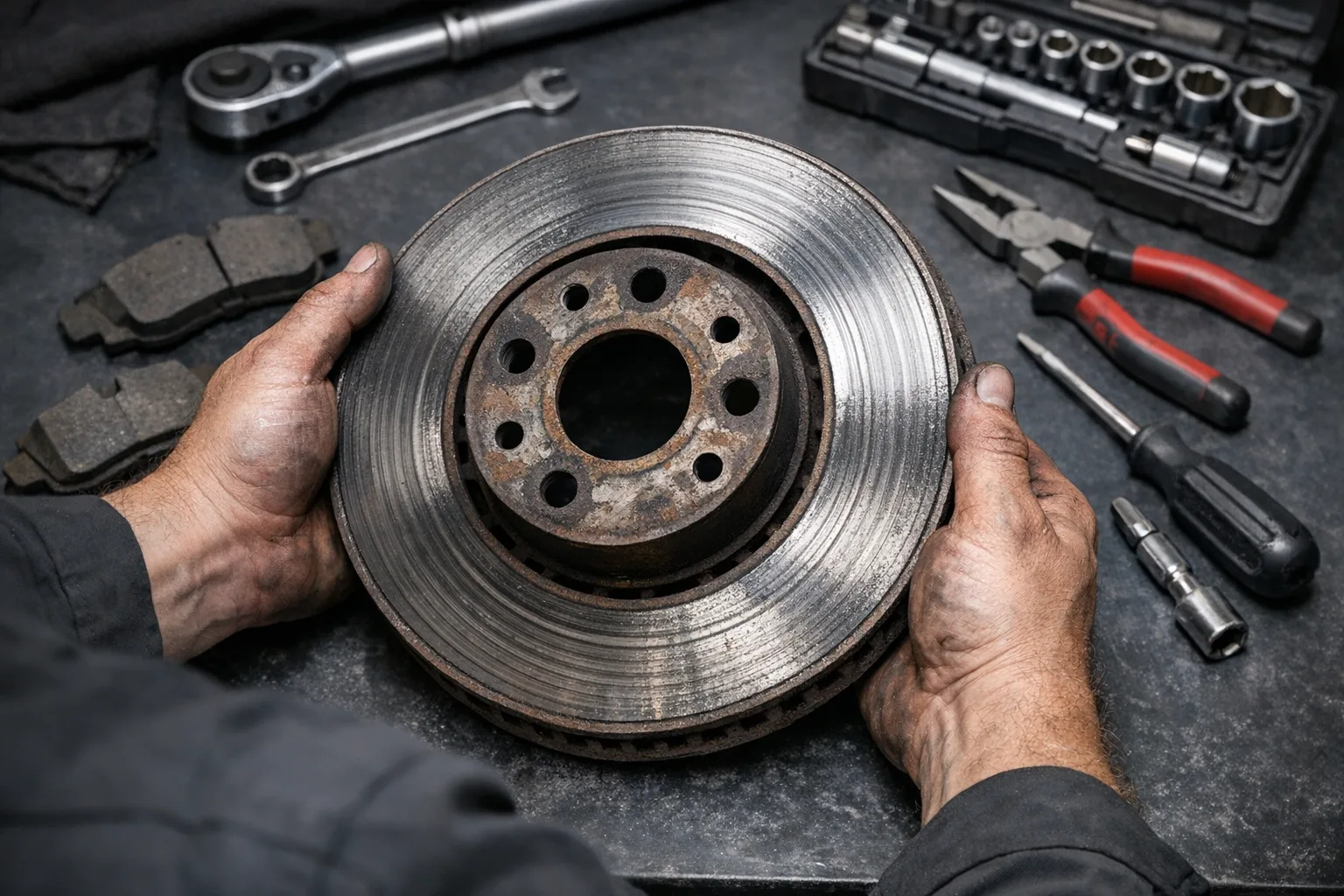
The $1,200 Bill That Stunned a Toyota Camry Owner
Here's a number that makes mechanics wince and car owners blanch: 68% of American drivers have zero confidence they can spot a fair brake repair quote. That statistical abyss, drawn from a 2025 consumer survey cited by Fair Repair Auto, costs millions annually in overcharges. The most recent data shows a complete four-wheel brake service—pads and rotors front and rear—averages between $600 and $1,200 depending on your vehicle class. That's not chump change for a routine maintenance item that every car on the road needs every 30,000 to 70,000 miles.
Price-Quotes Research Lab has compiled cost estimates across five independent automotive pricing databases to give you the definitive 2026 breakdown. We sliced the numbers by vehicle type (sedans, SUVs, trucks), by component (pads only, rotors only, full system), and by shop type (independent versus dealership). The variation is stark—and most people are getting taken.
The Baseline: What Is a "Brake Job" Actually Costing You?
Before we dive into vehicle-specific pricing, let's establish the foundation. A brake job splits into three cost buckets: parts, labor, and ancillary fees (taxes, disposal, fluids). According to TheCostGuide's analysis of 2,847 repair estimates, the typical range runs $300 to $600 per axle for a complete brake job combining pads and rotors. Parts alone run $150 to $350 per axle. Labor adds another $150 to $250 per axle, typically consuming 1.5 to 2.5 hours of technician time.
But here's where it gets interesting. Those figures assume a standard passenger car. Swap in a full-size pickup or an imported luxury SUV, and the numbers pivot hard. Parts for a heavy-duty truck brake system frequently cost 40% more than comparable sedan components. Labor times balloon because brake caliper bolts on many German vehicles corrode and snap, turning a 90-minute job into a three-hour ordeal. The vehicle dictates the economics.
Brake Pad Replacement Costs: The Entry-Level Fix
Brake pads wear down first. That's physics—friction material degrades every time you stop. Most drivers replace pads before rotors, making pad-only service the most common brake repair. LatestCost's 2026 data shows front brake pad replacement (parts and labor) ranges from $120 on the low end to $260 on the high end, with $190 being the average. Rear pads run slightly cheaper: $100 to $240, averaging $170.
For pad-only service, you're paying for:
- Brake pads: $30–$80 per axle for standard organic or semi-metallic pads. Ceramic pads run $50–$120 per axle.
- Labor: Typically 0.5–1.0 hours at $75–$125 per hour. Total labor: $50–$150.
- hardware: Caliper bolts, shims, and anti-squeal clips sometimes need replacement. Adds $15–$40.
Pad-only service makes sense when your rotors are still within specification (typically above 0.25 inches of minimum thickness) and show no scoring, heat spots, or warping. Skipping rotor replacement when it's actually needed is a false economy—worn pads against bad rotors create unsafe stopping distances and can damage your calipers.
Rotor Replacement Costs: The Hidden Expense
Rotors are the discs your brake pads clamp against. They wear more slowly than pads but degrade in different ways: thickness variation from heat cycling, rust pitting from moisture, and scoring from contaminated brake dust. Cost Digest's 2026 guide places front rotor replacement at $200 to $700 per axle, with rear rotors slightly lower at $180 to $640.
The wide range reflects rotor type choices:
- Standard iron rotors: $80–$150 each. Most common. Functional but plain.
- Drilled and slotted rotors: $120–$250 each. Performance-oriented. The holes and slots help gas escape during hard braking, reducing fade.
- Carbon-ceramic rotors: $400–$800 each. Found on high-performance and luxury vehicles. Extreme durability, but replacement costs will make you weep.
- Remanufactured/reconditioned rotors: $60–$120 each. An option if your rotors can be machined, but many shops skip resurfacing due to liability concerns.
Labor for rotor replacement typically runs 1.0–1.5 hours per axle, assuming no seized bolts. On vehicles with integrated wheel hub assemblies (many modern cars), rotor replacement may bundle with bearing service, pushing costs higher.
Complete Brake Job: When You Need Pads AND Rotors
The full monty. When both pads and rotors need replacement, you're looking at what the industry calls a "complete brake job." One and Done Prep's 2026 estimates show per-axle costs ranging from $300 to $900 depending on component quality. The average across multiple sources sits around $550 per axle for mid-range parts and labor.
Breaking down a complete front axle job (the most common full service):
- Ceramic or semi-metallic pads: $60–$120 for a quality set
- Pair of rotors: $160–$300 for standard replacement discs
- Labor (1.5–2.5 hours): $150–$300 at independent shop rates
- Hardware and fluids: $20–$60
- Total per axle: $390–$780
A full four-wheel complete brake job—front and rear axles—thus ranges from $800 to $1,500 at independent shops. Dealerships? Plan on 40% to 60% more. That $1,200 estimate from our opening horror story? Completely plausible for a front-and-rear job at a dealership service center on certain vehicles.
Cost Breakdown by Vehicle Type
This is where the rubber meets the road. Vehicle class dramatically affects brake component costs through three mechanisms: rotor size, caliper design, and parts availability.
Sedans: The Efficient Middle Ground
Compact and midsize sedans represent the most straightforward brake service scenario. Rotors are typically 10–12 inches in diameter. Calipers are single-piston designs on most economy models, moving to two-piston on sport variants. Parts are mass-produced, keeping costs competitive.
Typical 2026 sedan brake costs:
Common examples: Toyota Camry, Honda Accord, Nissan Altima, Ford Fusion, Hyundai Sonata. The Toyota Camry—America's best-selling sedan for years—commands some of the most competitive brake service pricing due to parts ubiquity. Independent shops see Camrys constantly and know exactly what to charge. Sport utility vehicles and crossovers weigh 10–25% more than comparable sedans. That mass translates directly to larger brakes: rotors often measure 12–14 inches, calipers may require four or six pistons for adequate clamping force. More rotor mass means higher material costs. More pistons mean pricier caliper rebuilds or replacements. Typical 2026 SUV brake costs:
The premium is most pronounced on all-wheel-drive SUVs because they often use the same rotor size front and rear, unlike sedans where rear brakes are typically smaller. Full-size SUVs like the Chevrolet Tahoe or Ford Expedition push costs even higher due to 5,000+ pound curb weights requiring heavy-duty brake components. Trucks are brake service's most expensive category for everyday vehicles. A Ford F-150 or Chevrolet Silverado weighs 4,500 to 5,500 pounds. Gross vehicle weight ratings push 7,000+ pounds when loaded. Brake components scale accordingly: 13–15 inch rotors are common, often featuring performance-oriented drilled-and-slotted designs from the factory. Typical 2026 truck brake costs:
Heavy-duty trucks (Ford Super Duty, Ram 3500, Chevrolet Silverado HD) escalate further. Their massive 17-inch rotors and multi-piston calipers mean parts costs frequently double sedan pricing. A full brake job on a loaded Ram 3500 can approach $2,500 at dealership rates. Luxury brands don't just charge more for the badge—they engineer brakes differently. BMW, Mercedes-Benz, Audi, and Porsche frequently use carbon-ceramic composites, aggressive brake pad compounds requiring specific break-in procedures, and integrated electronic systems (brake-by-wire, adaptive cruise control collision avoidance integration). These aren't your grandfather's drum-and-shoe setups. Typical 2026 luxury vehicle brake costs:
When BMW's M-series brakes need service, owners sometimes face brake repair bills exceeding new economy car payments. The parts aren't just expensive—they're often unavailable from third-party suppliers, locking owners into dealership service departments or specialty independent shops with premium pricing. The shop choice matters enormously. Every pricing source we reviewed consistently shows dealerships charging 30% to 60% premiums over independent mechanics for identical brake work. TheCostGuide explicitly notes dealership brake jobs run 40% to 60% higher than independent shops. Why the gap? Several factors converge: For out-of-warranty vehicles, independent shops represent obvious value. For vehicles under factory or extended warranty, understand your coverage terms before assuming dealership service is mandatory—many warranties explicitly allow independent shop repairs without voiding coverage. Absolutely—if you have the tools, space, and mechanical aptitude. DirectBrakes' analysis notes DIY parts-only costs range from $100 to $400 depending on quality level. Compare that to $300–$600 for professional installation and you're looking at $200–$500 in potential savings per axle. But brake work has hidden requirements: For most drivers, professional installation makes sense. The 68% of drivers who can't assess fair brake quotes? They're probably not the ones who should be compressing brake pistons in their driveway. But for the mechanically inclined, DIY represents genuine savings. Beyond vehicle type, several less-obvious factors push your brake bill in unexpected directions: Regional labor rates: Brake technicians in San Francisco or Manhattan charge $120–$150 per hour. In rural Tennessee or Oklahoma, same work runs $65–$85 per hour. A $600 brake job in Nashville might cost $950 in Manhattan. Endurance Warranty's vehicle-specific guide confirms this regional variation across all vehicle categories. Parts quality tiers: Budget brake pads ($25–$40 per axle) exist and work acceptably for gentle driving. Premium ceramic pads ($80–$150 per axle) offer better bite, quieter operation, and longer rotor life. The cheap pads wear rotors faster, potentially costing more long-term than buying quality components initially. Corrosion and seized components: Brake caliper slides seize, bolts rust in place, and brake lines deteriorate in salt-exposed northern states. A brake job that should take 90 minutes becomes 3 hours when bolts break and require extraction. Budget 20–30% contingency for unexpected complications, especially on vehicles over 8 years old or in rust-belt states. Emergency vs. scheduled service: Towing your car to a shop because your brakes failed catastrophically eliminates your negotiating leverage. Shops charge premium rates for urgency. Scheduling brake service 2–3 weeks out lets you gather quotes and choose wisely. Price-Quotes Research Lab analysis reveals a clear economy of scale in brake replacement. Replacing all four corners at once—rather than doing fronts one year and rears the next—typically saves 10–15% through reduced shop overhead and parts bundling. More importantly, it equalizes wear across the system, preventing the scenario where you're back for another $500 repair 18 months later. When you factor in the convenience of a single service appointment, coordinated timing, and predictable total cost, full system replacement usually wins on total cost of ownership. Most brake systems are designed to wear pads and rotors together anyway—replacing only pads on severely worn rotors compromises safety and component life. Arm yourself with data before you hand over your keys. CarsCounsel's brake cost calculator provides vehicle-specific estimates based on your make, model, and year. Cross-reference with the ranges in this article for your vehicle class. When getting quotes, ask for itemized breakdowns: parts cost and brand, labor hours and rate, and any additional charges. A vague "$800 for front brakes" quote hides too much. A detailed quote shows exact pad model, rotor specification, and hourly labor rate—information that lets you comparison shop accurately. Watch for upsells. Brake fluid flushes are legitimate every 2–3 years but aren't always necessary at every brake job. Caliper rebuilds extend component life but cost $100–$200 extra; only pursue if your calipers show leakage or seized operation. Hardware replacement (slides, clips, bolts) runs $30–$60 extra per axle—worth it if components show wear, unnecessary if everything looks fresh. Price-Quotes Research Lab recommends obtaining at least three quotes for brake work exceeding $400. The spread often surprises—even within the same zip code, competing shops may quote $350 versus $550 for identical work. That $200 difference funds several tanks of gas. Excessive brake wear sometimes indicates underlying issues requiring more than pad-and-rotor replacement. warped rotors from aggressive mountain driving, glazed brake surfaces from riding the pedal in traffic, or premature pad wear suggesting caliper problems all merit investigation beyond surface-level service. If your brake job costs significantly exceed the ranges in this article—say, a Honda Civic quote of $1,200 for a complete front brake job—something's wrong. Either the shop is padding charges, or they found additional issues requiring disclosure. Never pay for unexplained charges. Request visual evidence (photos of worn components) and detailed explanations before authorizing any repair beyond your initial quote. 2026 brake replacement costs by vehicle type: These ranges assume standard to mid-grade components at independent repair shops. Pad-only jobs at dealerships can double independent shop prices. Premium component upgrades add $100–$300 per axle. Geographic location swings costs 20–40% based on local labor rates. The days of nodding blankly at brake repair quotes are over. You now have real data, vehicle-specific ranges, and understanding of what drives cost variance. The next time that grinding sound appears when you brake, you'll know exactly what fair looks like—and exactly how much room you have to negotiate. ← Back to Research Blog • Methodology • MechanicNow Directory
SUVs and Crossovers: The Weight Premium
Pickup Trucks and Full-Size Vehicles: Industrial-Strength Pricing
Luxury and Performance Vehicles: The Premium Multiplier
Independent Shop vs. Dealership: Where You Actually Save Money
DIY Brake Replacement: Can You Actually Save Money?
What Actually Drives Brake Cost Variance?
The Math on Full System Replacement
Protecting Yourself from Brake Repair Overcharges
When Brake Costs Signal Bigger Problems
Bottom Line: What You Should Actually Pay
Key Questions
How much should a full brake job cost in 2026?
Is it worth replacing rotors with brake pads?
How long does a brake replacement take?
What's the difference between front and rear brake costs?
Are aftermarket brake parts as good as OEM?
How often should brakes be replaced?
Can I negotiate brake repair prices?
Related Services