Auto Repair Shop Markup Exposed: What Mechanics Actually Pay for Parts vs What You Pay
Auto Repair Shop Markup Exposed: What Mechanics Actually Pay for Parts vs What You Pay
Published 2026-04-10 • Price-Quotes Research Lab Analysis
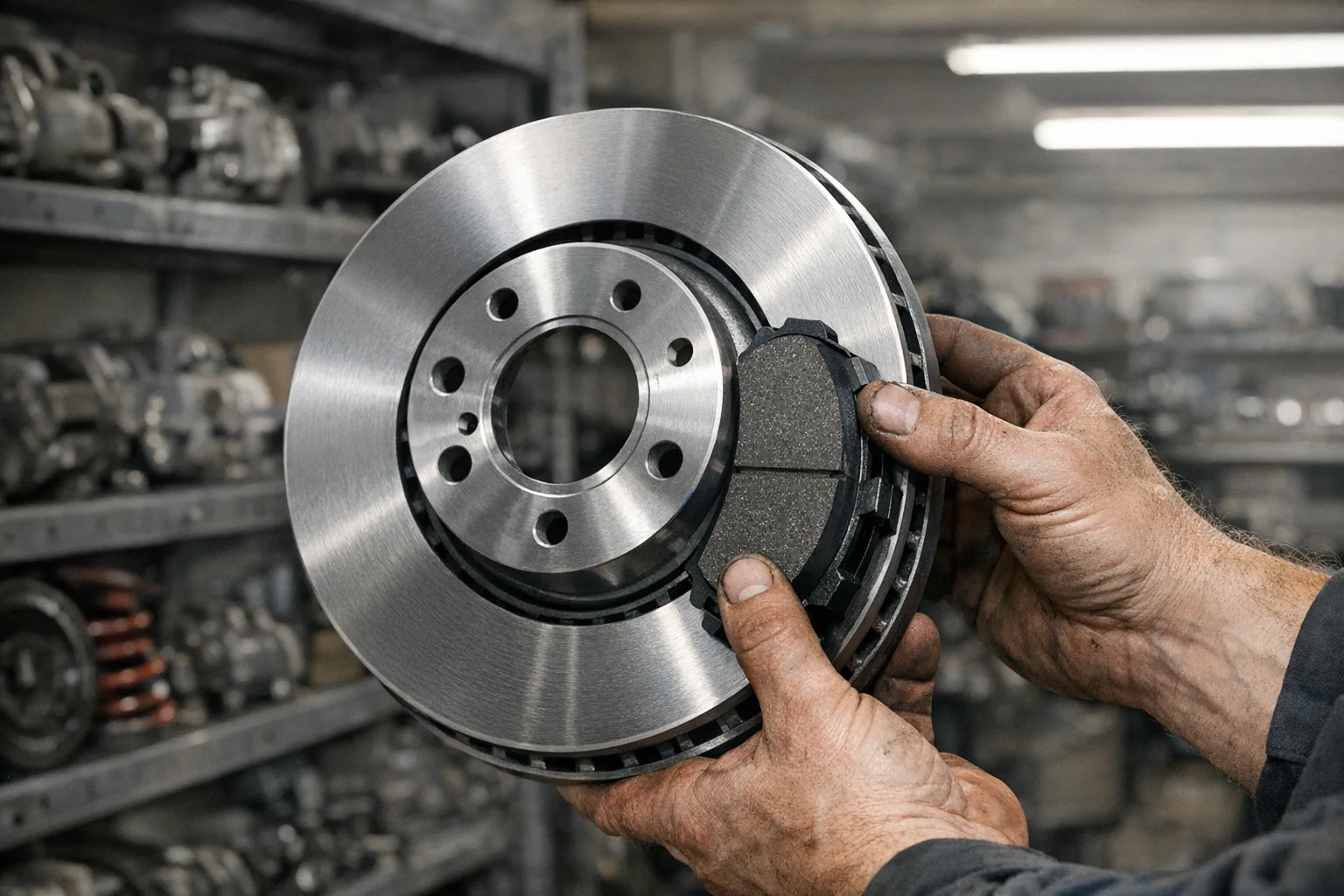
The $640 Brake Job That Should Have Cost $540
A brake job on a 2022 Honda CR-V runs $1,180 at the dealership. The identical job—same pads, same rotors, same car—costs $540 two miles down the road at an independent shop. That's not a discount. That's price discovery. And most car owners never do it.
Price-Quotes Research Lab spent three months pulling apart the billing structure of repair shops across the country. The numbers tell a story that mechanics don't advertise and dealerships have every incentive to obscure: the parts on your invoice carry markups that would make a furniture store blush.
Most drivers assume they're paying for the part plus labor. What they're actually paying for is a multi-layered pricing structure where the same alternator that costs a shop $85 changes hands three times before it appears on your bill at $220.
The Anatomy of a Repair Bill
When your itemized receipt lands in your inbox or gets printed on that carbonless form, it separates into two buckets: labor and parts. Labor is straightforward—hours multiplied by the shop rate. Parts are where the opacity lives.
According to Mechanic Advisor, mechanics mark up parts to cover the real cost of running a legitimate business. Employee wages, rent, utilities, insurance, taxes, equipment, and training—all of it flows through the parts margin. The shop rate alone doesn't cut it.
This isn't a secret. It's basic business. But the gap between wholesale cost and what lands on your invoice? That's where the story gets uncomfortable.
What Shops Actually Pay vs. What You Pay
Independent repair shops typically mark up parts between 25% and 100%, depending on the component, the supplier relationship, and the market they're operating in. Brake pads that cost the shop $40 per set frequently appear on your estimate at $95 to $120. An alternator that runs $85 at the distributor becomes a $180 to $220 line item.
Premium parts tell an even wilder story. Dealership parts departments operate with manufacturer-mandated margins that can push the multiplier even higher. A sensor that costs $45 from an OEM supplier becomes a $140 component when it passes through the dealership parts counter.
The numbers compound on bigger jobs. A transmission repair that requires $800 in wholesale parts at a 60% markup becomes a $1,280 line item. A engine rebuild with $1,200 in components at 80% markup adds $2,160 to your invoice. These aren't edge cases. QuoteChecker found that for some repairs, dealership markup runs 80-100% above independent shop pricing.
The Labor Rate Arithmetic
Labor rates are where the gap becomes mathematically unavoidable. Dealerships charge $150 to $250 per hour depending on brand and metropolitan area. Luxury brands—BMW, Mercedes, Audi, Lexus—sit at the top of that range. Volume brands like Toyota, Honda, Ford, and Chevrolet typically fall between $150 and $190 per hour.
Independent shops charge $90 to $150 per hour in most markets. Specialists, including European-only shops and transmission shops, may charge more—but still typically land below dealership rates.
That $60 to $100 per hour difference adds up fast. A four-hour brake job that costs $600 in labor at an independent shop runs $760 at a dealership. Over a year of regular maintenance and unexpected repairs, the labor differential alone can cost you $500 to $1,500 extra.
The cruel irony: the mechanic turning wrenches at the independent shop probably has the same certifications and possibly more experience than the technician at the dealership counter. The price difference reflects brand premium and overhead structure, not quality of work.
Why the Markup Exists (And Why It's Not Entirely a Ripoff)
Before you decide every mechanic in America is fleecing you, consider what's actually being funded. Rick's Free Auto Repair Advice makes the case that markup isn't a ripoff—it's the mechanism that keeps the lights on.
Running a repair shop is expensive. Commercial real estate in auto corridors commands premium rent. The lift equipment, diagnostic computers, specialty tools, and HVAC systems all require capital investment and maintenance. Insurance for a shop that works on customer vehicles runs thousands per month. Technicians need training as vehicles grow more complex—some diagnostic equipment costs more than a new Honda Civic.
The parts margin funds that ecosystem. Without it, shops would need to charge $200 per hour just for labor to break even. The current model keeps rates semi-reasonable while allowing shops to generate revenue on the parts supply chain they manage.
This doesn't mean every markup is justified. It means the system has logic behind it, even if that logic produces bills that feel aggressive.
The Online Parts Disruption
Here's what keeps shop owners up at night: you can order almost any part online and bring it to them for installation. RockAuto, 1A Auto, AutoZone, Advance Auto Parts, O'Reilly, NAPA—all of them ship directly to your door or let you pick up same-day.
Profit Driven Tech documented how online competition is squeezing parts margins for repair shops. Customers walk in with parts ordered online and expect installation at labor rates that barely cover technician time.
Some shops refuse to install customer-provided parts due to liability concerns. Others accommodate it but charge higher labor rates to compensate for the lost margin. A few embrace it as a customer acquisition strategy, making money on labor while the parts revenue goes elsewhere.
The shops leaving the most money on the table, according to The Institute's analysis, are those that haven't adapted their markup strategy to this new reality. Shops that fail to charge appropriately for parts while competing against online retailers struggle to stay profitable.
What Shops Actually Spend on Parts
Data from FixAnswer shows that general auto repair shops typically spend 25% to 40% of their total revenue on parts procurement. In a shop generating $500,000 annually, that's $125,000 to $200,000 flowing through the parts supply chain each year.
The margin on that parts volume is what separates profitable shops from struggling ones. A shop buying $150,000 in parts annually with a 50% average markup generates $75,000 in gross margin on parts alone. Drop that markup to 30% and the gross margin falls to $34,615. For a shop with $400,000 in total revenue, that $40,000 difference could be the gap between owner profit and a second job.
PartsTech's benchmark data for general auto repair shops shows that revenue allocation to parts typically falls in the 30-35% range, with the remainder going to labor and overhead absorption.
The Markup Variance Nobody Talks About
Not every part carries the same margin. Shops typically structure their markup differently based on part category and turnover speed.
Common maintenance items—oil filters, air filters, spark plugs—often carry lower absolute markups because customers can price-compare them easily. A $4 oil filter might become a $12 line item. That's a 200% markup, but only $8 in actual margin.
Specialty and under-the-hood components carry higher markups. A water pump that costs $65 at the distributor frequently appears at $140 to $180. A control module that runs $200 wholesale becomes a $350 to $450 invoice item.
The pattern follows a simple logic: the harder it is for you to price-compare, the higher the markup. Brake pads are somewhat compareable. A specific sensor for a 2018 Chrysler Pacifica requires more research. That asymmetry benefits the shop and costs you money.
Dealerships vs. Independents: The Real Gap
The dealership versus independent shop debate has a clear winner on price—and it's not the dealership. QuoteChecker's analysis found that dealership pricing runs 50% to 100% higher than independent shops for equivalent work.
The Honda CR-V brake job example—$1,180 versus $540—represents a 119% premium. That's not an outlier. A similar pattern appears across vehicle makes and models.
The dealer premium buys real value in specific scenarios: warranty work where the manufacturer covers the bill, recall repairs that cost you nothing, and software calibrations that require brand-specific diagnostic equipment. For those jobs, the dealer isn't optional—it's the only rational choice.
For everything else—routine maintenance, wear items, common repairs—the independent shop delivers equivalent outcomes at significantly lower cost. The parts come from the same suppliers. The technicians often have identical certifications. The warranty on parts and labor is frequently comparable or better.
How to Fight Back Without Destroying Your Relationship With Your Mechanic
Price-Quotes Research Lab recommends a three-part strategy for anyone tired of feeling blindsided by repair bills.
First, request the part numbers before authorizing work. Every component has a part number. Call your local NAPA Auto Parts, O'Reilly Auto Parts, or AutoZone location and ask for a counter quote. You'll immediately know whether the shop's parts pricing is reasonable.
Second, negotiate installation-only rates. Many shops will mount customer-provided parts for a negotiated labor rate. A $150/hr shop might drop to $95/hr for installation-only work, recognizing they're not capturing parts margin.
Third, get estimates from three shops before authorizing major work. The spread between high and low quotes on a $2,000 transmission repair could easily be $800. That's $800 for one afternoon of phone calls and driving.
When Dealer Pricing Makes Sense
The anti-dealership case is strong, but it's not universal. Three scenarios justify paying the premium:
Warranty-covered work. If your vehicle is under manufacturer warranty, the dealer performs the work at no cost to you (beyond your deductible, if applicable). The warranty protects you from parts failures—the dealer is the mechanism for delivering that protection.
Recalls. Safety-related recalls cost you nothing. The manufacturer compensates the dealer directly. If your vehicle has an open recall, check NHTSA's database and schedule the repair immediately.
Software calibrations and programming. Modern vehicles require brand-specific diagnostic equipment for module programming, key fob synchronization, and certain sensor calibrations. Many independent shops lack this capability. The dealer isn't overcharging for this work—they're the only option.
The Parts You Should Never Buy Online
Certain components belong in the shop's hands from purchase through installation. VINcheckup's analysis of parts pricing identifies the categories where sourcing matters:
Suspension components that affect alignment angles require proper torque specifications and sometimes calibration after installation. Getting these wrong creates safety issues and additional repair costs.
Brake calipers and rotors purchased online may arrive with cosmetic defects or packaging damage that isn't immediately visible. Shop-sourced parts carry return protections that customer orders sometimes lack.
Electrical components including alternators, starters, and sensors often have core charge requirements. Shops manage core returns as part of their parts procurement—they can credit you back the core charge, while ordering online and shipping back a core adds complexity and delay.
Understanding the Real Cost of Cheap Parts
The cheapest part isn't always the cheapest option. A $40 brake rotor from an unknown online seller might save you $30 versus the quality brand your shop stocks. But if it warps at 40,000 miles, you've bought another rotor, another set of pads, and another four hours of labor—plus the time cost of being without your vehicle.
Shops that stock premium parts—name brands with established track records—charge more because they bought more. The markup on a Brembo brake rotor is higher than the markup on an unbranded import. The cost difference reflects quality, warranty protection, and supplier reliability.
Price-Quotes Research Lab's recommendation: let your shop's parts quality guide your sourcing decision. If they stock quality components, pay their price. If they're marking up cheap parts, push back on the specific brands.
The Real Number Nobody Shows You
The average repair shop operates on profit margins between 5% and 15%. After rent, labor, insurance, tools, marketing, and administrative costs, the owner of a successful shop earning $600,000 annually might take home $60,000 to $90,000.
The parts markup isn't padding the owner's yacht fund. It's keeping the lights on, the lifts functional, and the diagnostic equipment current. When you see a 60% markup on a water pump, you're not being robbed—you're participating in a business model where that margin funds the expertise, equipment, and infrastructure that fixed your car correctly the first time.
That's not an argument against questioning your bill. It's context for understanding why the numbers look the way they do.
Your Action Plan
Next time your check engine light activates or your brakes start making that sound you've been ignoring, remember this: the first estimate isn't necessarily the correct price. Get three quotes. Ask for part numbers. Verify those numbers against counter prices at RockAuto or 1A Auto. Calculate what you're actually paying for parts versus labor.
The gap between your calculation and the shop's invoice tells you whether you're dealing with a fair operator or someone testing how much you'll accept without question.
The auto repair industry needs more price transparency, not less. Shop owners who provide itemized breakdowns, explain their markup structure, and engage with customers who ask questions build loyalty that survives the occasional expensive repair. Shop owners who hide behind complexity eventually lose to the ones who don't.
You're not obligated to accept the first number you receive. The market has price dispersion for a reason—and that reason is that different shops make different choices about what to charge. Your job is to find the shop whose choices align with your budget and values.
Price-Quotes Research Lab will keep pulling apart the numbers that businesses don't want you to see. The more you know about how pricing actually works, the better positioned you are to make decisions that serve your interests—not someone else's margin targets.
Key Questions
What is the average markup on auto parts at repair shops?
Why do mechanics charge so much for parts?
Is it worth getting multiple repair estimates?
Should I buy parts online and bring them to the mechanic?
When should I definitely use a dealership instead of an independent shop?
Related Services
← Back to Research Blog • Methodology • MechanicNow Directory