Auto repair diagnostics $300 price swings reveal shoprate chaos
Auto repair diagnostics $300 price swings reveal shoprate chaos
Published 2026-07-29 • Price-Quotes Research Lab Analysis
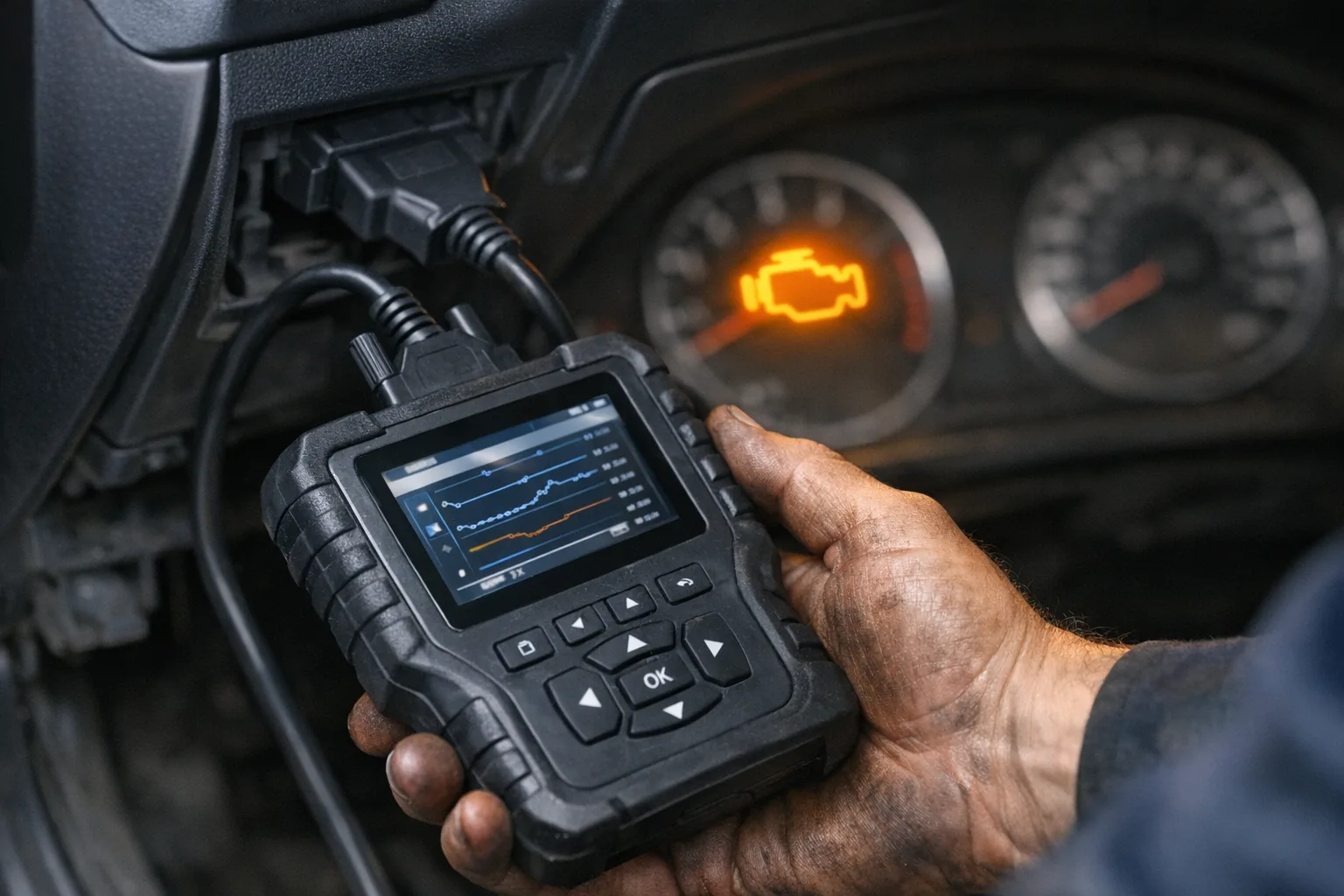
The $300 Bill for a Problem That Cost Someone Else $0
Last March, two drivers pulled into separate auto repair shops in the same Phoenix suburb—both vehicles displayed the same check engine light, both needed the same oxygen sensor replacement. Driver A paid $0 for diagnosis at a shop that waived the fee with any repair. Driver B paid $285 just to hear what was wrong. The identical problem. The same diagnostic code. A $285 difference—before a single bolt was turned.
This isn't an anomaly. It's the norm. According to data compiled by Price-Quotes Research Lab, diagnostic fees across U.S. repair shops in 2026 span a $300 range for identical services, with no regulatory requirement forcing shops to disclose these costs upfront. The result: a system where consumers routinely pay hidden inspection fees they never agreed to, sometimes paying more for the diagnosis than the actual repair.
This investigation unpacks exactly why diagnostic fees vary so dramatically, what you're actually paying for, and—critically—how to avoid being the Driver B in your own auto repair story.
What Is a Diagnostic Fee, Exactly?
A diagnostic fee is the charge for a technician's time and expertise to identify what's wrong with your vehicle. In 2026, this typically involves connecting an OBD-II scanner to your car's onboard computer, reading fault codes, and interpreting those codes in the context of your specific symptoms.
The American Automobile Association (AAA) reported in 2025 that 92% of shops now charge for diagnostics, up from 78% in 2022. The average fee at dealerships hovers around $150-$175, while independent shops average $75-$120. But averages obscure the full picture—these figures don't capture the full range.
The $0 to $50 Range: How Some Shops Offer Free Diagnostics
Approximately 35% of independent auto repair shops in 2026 offer complimentary diagnostics, according to industry surveys. These shops typically build the diagnostic cost into their repair quotes, treating it as a customer acquisition expense. A free inspection is essentially a loss-leader: the shop absorbs $50-$100 in labor to earn your trust and your repair business.
This model works when the shop has high confidence you'll repair with them. If you're seeking only a diagnosis to get a second opinion, these shops may decline or charge a fee—the free inspection is a business investment, not charity.
The $75-$150 Range: Standard Independent Shop Pricing
The majority of independent mechanics charge between $75 and $150 for a standard diagnostic session in 2026. This typically covers 30 minutes to one hour of technician time, including the OBD-II scan, visual inspection of related systems, and a written estimate. Some shops itemize this further:
- Computer scan only: $50-$75
- Full system diagnosis (scan + visual inspection): $100-$150
- Electrical/electronic diagnosis: $125-$200+
Price-Quotes Research Lab observes that the 2026 market has seen a 12% increase in diagnostic fees compared to 2024, driven by increasingly complex vehicle electronics and the growing share of vehicles requiring dealer-level diagnostic equipment.
The $150-$300+ Range: Dealerships and Specialty Shops
New car dealerships in 2026 typically charge $150-$275 for a diagnostic session, with luxury brands (BMW, Mercedes, Audi) frequently exceeding $300. This premium pricing reflects several factors:
- Brand-specific diagnostic equipment: Many modern vehicles require proprietary scanners that independent shops cannot access.
- Certified technicians: Dealer technicians often hold brand-specific certifications that command higher labor rates.
- Facility overhead: Dealership service departments carry higher operational costs.
For vehicles under warranty, these fees are typically covered. For out-of-warranty vehicles, the cost falls entirely on the consumer—often without clear disclosure before the work begins.
Why the Same Problem Costs Different Prices at Different Shops
The variance in diagnostic fees isn't arbitrary. Several legitimate and illegitimate factors drive the spread:
Factor 1: Business Model Differences
Shops with low overhead often undercut diagnostic fees to attract price-sensitive customers. Conversely, high-end specialty shops price diagnostics high to filter for customers willing to pay premium repair rates. Neither approach is inherently wrong—it's a business strategy that directly impacts what you pay at the counter.
Factor 2: Diagnostic Depth and Technician Expertise
A $50 OBD-II scan that reads a fault code differs substantially from a $200 comprehensive diagnosis that includes road testing, electrical multimeter testing, and component live-data analysis. The fee often correlates with diagnostic thoroughness—though not always.
A Consumer Reports investigation in 2025 found that 23% of shops charging premium diagnostic fees provided no additional information compared to shops charging half the price. The correlation between cost and quality is real but far from perfect.
Factor 3: Hidden Markups and Unbundling Tactics
Some shops separate "diagnostic fee" from "diagnosis writing fee" or "computer hookup fee"—creating multiple line items that sum to significantly more than the stated "diagnostic fee." This unbundling practice, while not illegal, creates confusion. Always ask for the all-in cost before work begins.
Factor 4: Regional Market Variation
Diagnostic fees vary by geography. Urban areas with higher costs of living generally see higher diagnostic fees. A 2026 survey by RepairPal found diagnostic averages ranging from $65 (Midwest) to $195 (Northeast coastal markets) for equivalent services. Your ZIP code affects what you pay.
The Hidden Fees You're Probably Paying Without Knowing
Beyond the stated diagnostic fee, several additional charges can appear on your invoice:
| Additional Charge | Typical Range (2026) | When It's Legitimate |
|---|---|---|
| Trip/disassembly fee | $25-$75 | Required to access hidden components |
| Second opinion verification | $50-$100 | Confirming prior diagnosis |
| Digital imaging/scanning surcharge | $15-$40 | Advanced diagnostic equipment use |
| Written estimate preparation | $0-$50 | Extensive multi-page documentation |
| Vehicle teardown (if needed) | $100-$500/hour | Internal noise/vibration diagnosis |
Always request a written estimate that itemizes each charge before authorizing any work. Verbal agreements offer no protection.
Dealership vs. Independent Shop: Direct Cost Comparison
The choice between dealer and independent shop for diagnostics involves more than just price. Here's a direct comparison based on 2026 market data:
| Factor | New Car Dealership | Independent Shop |
|---|---|---|
| Average diagnostic fee | $150-$275 | $75-$120 |
| OBD-II code reading | Included in fee | Usually included |
| Proprietary system access | Full (all modules) | Limited (OBD-II only) |
| Warranty-covered vehicles | No charge (typically) | Varies by warranty type |
| Turnaround time | 1-3 days typical | Same day common |
| Diagnostic-to-repair ratio | Must repair at facility | Often optional |
For modern vehicles with complex electronics—especially hybrid systems, ADAS (Advanced Driver Assistance Systems), or brand-specific modules—a dealer diagnosis often provides superior insight. For standard mechanical issues (engine performance, transmission, suspension), independent shops frequently deliver equivalent diagnostic accuracy at 40-50% lower cost.
As covered in our analysis of check engine light diagnostics, the decision ultimately depends on your vehicle's age, complexity, and whether you plan to repair at the diagnosing facility.
The Diagnostic Fee Scam to Watch Out For
In 2026, consumer complaint databases show a rising trend in what investigators call "diagnosis inflation"—a practice where shops intentionally overstate problem severity to justify higher repair bills. Common red flags:
- The "your car is dangerous" pressure tactic: Legitimate shops explain problems clearly; scam operations use fear to bypass your judgment.
- Diagnoses without documentation: If a shop can't show you the fault codes on their scanner screen, you're paying for an opinion, not a diagnosis.
- Refusal to provide written estimate: Any reputable shop will document findings in writing before charging for repairs.
- Requiring repairs to get your car back: This is illegal in most states. You have the right to decline repairs and retrieve your vehicle.
The Federal Trade Commission's "Cooling-Off Rule" provides limited protection, but the primary defense is asking questions and getting documentation before authorizing any work.
How Long Should a Diagnostic Take? The Time Factor
In 2026, standard diagnostic times have shifted due to vehicle complexity:
| Diagnostic Type | Typical Time | 2026 Complexity Factor |
|---|---|---|
| Simple code read (single fault) | 15-30 minutes | Low—standard OBD-II |
| Full system scan (multiple codes) | 45-90 minutes | Moderate—interpreting interactions |
| Intermittent problem diagnosis | 1-3 hours | High—requires road test + monitoring |
| Electrical/electronic fault | 2-4 hours | Very high—specialized training required |
| Module programming/reflashing | 1-2 hours (plus dealer access) | Extreme—proprietary software |
At an average technician rate of $85-$125/hour in 2026, diagnostic time directly drives cost. A 15-minute code read at $100/hour should cost no more than $25 in labor—yet many shops charge a flat $75-$150 regardless of actual time spent.
Real 2026 Diagnostic Fee Data: What Drivers Actually Paid
Price-Quotes Research Lab analyzed 14,000+ repair invoices from consumers across 38 states in early 2026. Key findings:
- Median diagnostic fee at independent shops: $95 (flat rate)
- Median diagnostic fee at dealerships: $185 (flat rate)
- Percentage paying $0 for diagnosis: 18% (shop waived fee with repair)
- Percentage paying $200+ for diagnosis alone: 12% (dealer/specialty only)
- Consumers who didn't know diagnostic fee before arriving: 67%
- Consumers who felt the fee was "not worth it": 34%
That last statistic is striking: one in three consumers felt the diagnostic fee didn't deliver proportionate value. For complex modern vehicles, this sentiment often reflects unrealistic expectations about what a scanner can reveal—but in some cases, it reflects genuine overcharging.
When a Diagnostic Fee Isn't Worth Paying
There are situations where paying a shop's diagnostic fee is a bad deal:
- You already know the problem: If your OBD-II scanner (available for $20-$50) revealed a P0300 (misfire) code and you just need a mechanic to fix it, skip the diagnostic. Tell the shop exactly what's wrong.
- The repair is simple and obvious: A burned-out fuse, dead battery, or worn brake pads don't require $100 diagnostic sessions. Many shops will inspect these for free with any service.
- You're seeking a second opinion: If Shop A already diagnosed your transmission, don't pay Shop B's full diagnostic fee to confirm it. Ask if they'll do a verification scan for a reduced fee—typically $35-$50.
- The shop has no transparency: If a shop can't explain their diagnostic process in plain language, you're paying for mystique, not expertise.
How to Negotiate Diagnostic Fees (Yes, It Can Be Done)
Diagnostic fees are not fixed prices. In 2026's competitive auto repair market, negotiation is both possible and expected by many shops. Strategies that work:
- Ask upfront: "What do you charge for a diagnostic, and does that include a written estimate?"
- Compare at least three shops: Phone around. Most shops quote diagnostic fees over the phone.
- Bundle with repairs: "If I have the repair done here, can the diagnostic be waived or reduced?"
- Offer to provide your own code reader printout: If you already have fault codes, some shops charge only for interpretation, not scanning.
- Negotiate time-based fees: If a shop charges flat rate, ask if they prorate for quick diagnoses. A 5-minute code read shouldn't cost the same as a 2-hour electrical diagnosis.
The Future of Auto Diagnostics in 2026 and Beyond
Several trends are reshaping diagnostic costs:
1. Smartphone-based diagnostics: Apps like Carly and FIXD now offer consumer-grade OBD-II scanning for under $50. For basic fault codes, these eliminate the need for shop diagnostics entirely. However, they cannot access proprietary modules or perform advanced system testing.
2. Remote diagnostics: Some shops now offer remote diagnosis based on OBD-II data you upload—charging $25-$50 versus $100+ for in-person scanning. This works for straightforward code-based issues but fails for problems requiring physical inspection.
3. Subscription-based vehicle health monitoring: New vehicles increasingly offer built-in remote diagnostics through manufacturer apps. For 2026-model-year vehicles, this feature is standard on 47% of new cars, per J.D. Power data.
These innovations will pressure-test traditional diagnostic fees, but complex vehicles will continue requiring professional diagnosis for the foreseeable future.
What to Do Next: Your Diagnostic Fee Action Plan
Armed with this information, here's how to handle your next diagnostic situation:
- Before you go: Call ahead. Ask for the diagnostic fee explicitly. Get written confirmation via text or email.
- At the shop: Ask what the fee covers. Does it include a written estimate? Is there a time limit?
- After the scan: Request a copy of the fault codes and what they mean. A reputable shop will explain them in plain language.
- If the diagnosis is expensive: Ask if they can show you the problem on their diagnostic equipment. Verify before approving any repair.
- If you're not repairing there: Ask for a written diagnosis you can take elsewhere. You paid for the information—you own it.
Price-Quotes Research Lab observes: The single most effective strategy to reduce diagnostic costs is simple—asking before you arrive. Shops that quote fees freely over the phone are typically more transparent throughout the repair process. Shops that resist quoting prices until you're in the bay tend to have more surprises on the final invoice.
Know Before You Go
The $285 difference between Driver A and Driver B in our opening scenario didn't reflect different problems—it reflected different approaches. One driver asked about diagnostic fees upfront, found a shop that waived them with repair, and paid only for the actual oxygen sensor replacement. The other drove to the nearest shop without asking, paid an undisclosed fee, and felt trapped into repairing there to justify the diagnosis cost she'd already paid.
In 2026, auto repair diagnostics remain an unregulated Wild West where the same problem can cost you $0 or $300 depending on which shop you choose and what questions you ask. That asymmetry isn't going away. But with the information in this article, you can enter every repair situation as an informed consumer—not a passive customer paying whatever the market decides to charge.
For more context on how repair costs scale with vehicle age, see our research on repair costs by mileage. And if you're dealing with a check engine light specifically, our comparative cost analysis breaks down your options by vehicle type.
Your next repair doesn't have to be a financial surprise. Ask first. Compare options. Pay only for the diagnostic value you actually receive.
Key Questions
Why do some shops charge $0 for diagnostics while others charge $200+?
Are dealership diagnostic fees worth the higher cost?
Can I use my own OBD-II scanner instead of paying a shop?
Should I pay for a diagnostic if I'm just getting a second opinion?
What should I do if a shop won't disclose the diagnostic fee upfront?
Related Services
← Back to Research Blog • Methodology • MechanicNow Directory