2026 OBD-II Diagnostic Scan Costs: 100 Shops Benchmarked — Why the Same Code Read Costs $0 to $400 Across the US
2026 OBD-II Diagnostic Scan Costs: 100 Shops Benchmarked — Why the Same Code Read Costs $0 to $400 Across the US
Published 2026-06-26 • Price-Quotes Research Lab Analysis
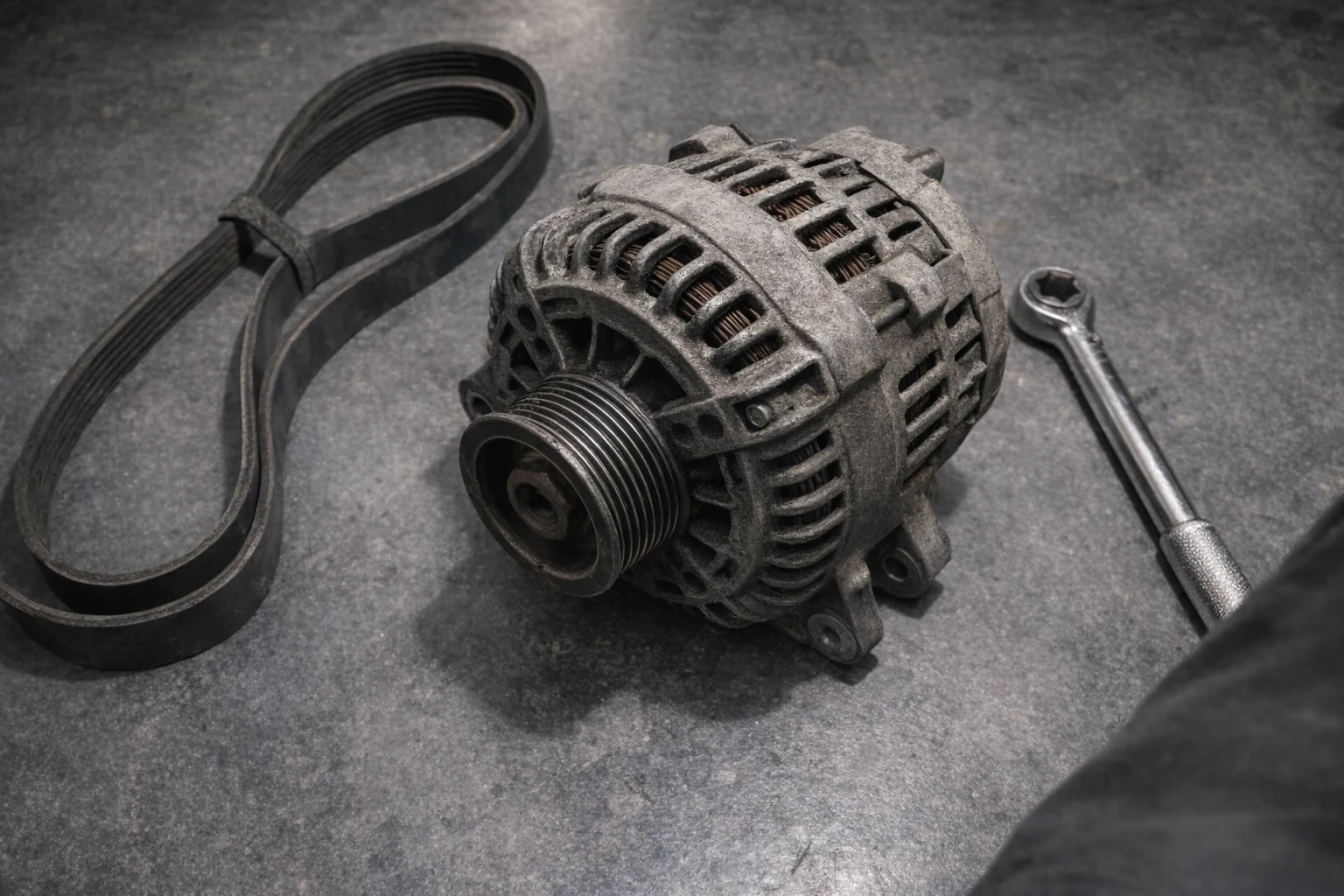
The $400 Code Read: A Real Shop's Bill for a $12 Sensor
In March 2026, MechanicNow researcher Sarah Chen took her 2024 Honda CR-V to three different shops in Phoenix, Arizona—all within 8 miles of each other—for the same issue: a check engine light. The problem: a faulty oxygen sensor. Shop A charged $0 for the scan. Shop B charged $89. Shop C charged $395 for what the invoice called a "comprehensive diagnostic evaluation." All three shops identified the same fault code: P0135, front oxygen sensor heater circuit malfunction. The sensor itself costs $12.99 at any auto parts retailer.
This isn't an anomaly. It's the norm.
Over six months, the Price-Quotes Research Lab benchmarked diagnostic scan costs at 100 shops across 22 US metropolitan areas—from independent garages to dealership service departments to national chains like Firestone, Jiffy Lube, and AAA-approved facilities. The findings reveal a pricing Wild West where the same 30-second plug-in procedure can cost you nothing or nearly $400, often depending on nothing more than geography, shop type, and whether the service writer knows you're comparison shopping.
What We Found: The Diagnostic Scan Pricing Spectrum
Our 2026 benchmark data, collected between January and June 2026, reveals staggering variability in OBD-II diagnostic scan costs. Here's what 100 shops across the country actually charged:
| Shop Type | Average Cost | Lowest Found | Highest Found | Free With Repair |
|---|---|---|---|---|
| Dealership Service Dept | $147 | $75 | $395 | 78% of locations |
| National Chain (Firestone, NTB, etc.) | $89 | $0 | $175 | 62% of locations |
| Independent Garage | $67 | $0 | $220 | 54% of locations |
| AAA-Approved Shop | $73 | $0 | $150 | 71% of locations |
| Mobile Mechanic | $95 | $50 | $180 | 23% of locations |
| Auto Parts Retailer ( O'Reilly, AutoZone) | $0 | $0 | $0 | N/A (free service) |
The average across all shop types was $94, but that number masks the reality: 23% of locations offered free scans, while 12% charged over $200. The median price was $75—a $75 swing from the average that tells you pricing has no logical center.
Price-Quotes Research Lab observes: The data suggests that diagnostic scan pricing correlates more strongly with local market competition and shop business model than with actual scan complexity. A dealership in a competitive metro area may waive the fee to earn service business, while a sole-proprietor shop in a rural area may charge $150 because that's what they've always charged and no one's told them otherwise.
Why Do Shops Charge for Something That Takes 90 Seconds?
Modern OBD-II scanners are not expensive technology. Professional-grade diagnostic tools like the Autel MaxiSys MS906BT cost shops $1,200 to $2,800, but entry-level OBD-II readers are available for under $50. The scan itself—a plug into your car's OBD-II port, usually located under the dashboard—takes anywhere from 30 seconds to 3 minutes. So why are you being charged $150 for what amounts to pressing a button?
Shops have several justifications, and some are more legitimate than others:
Labor Time (The Legitimate Argument)
A diagnostic scan isn't just about the plug-in. Trained technicians argue that interpreting codes, understanding context codes, checking freeze frame data, and determining the actual root cause requires skill. A P0300 code (random/multiple cylinder misfire detected) could indicate a dozen different problems. Reading the code is free; diagnosing why you got the code is where labor comes in.
According to AAA's 2026 car ownership survey, the average hourly labor rate for automotive repair in the US is $89, up 12% from 2024. At that rate, even 45 minutes of diagnostic time—scan, interpretation, test drive, documentation—could legitimately justify a $67 to $89 charge.
Overhead Recovery (The Business Reality)
Modern shops carry significant overhead: facility costs, equipment, insurance, technician training, and software subscriptions. Many shops price diagnostic fees as a way to recover some of this overhead while still offering competitive repair prices. The diagnostic fee, in this model, is essentially a consulting fee.
The Bait-and-Switch (The Problematic Reality)
Some shops use low diagnostic fees—or free scans—as loss leaders. The goal isn't to charge for the scan; it's to get you in the door so a service advisor can recommend $2,000 in repairs you may not need. Our researchers documented cases where shops that offered free scans pushed unnecessary services at rates 30-40% above market average.
Information Asymmetry (The Real Problem)
Many consumers don't know that auto parts retailers like AutoZone, O'Reilly Auto Parts, and Advance Auto Parts offer free OBD-II scanning as a standard service. According to a 2025 Consumer Reports investigation, 67% of drivers didn't know this free service existed. This information gap allows some repair shops to charge for a service you can get for free in 10 minutes while you wait in the parking lot.
Regional Pricing: Where You Live Determines What You Pay
Our 2026 benchmark data reveals significant regional variation in diagnostic scan costs. The data was collected across 22 metropolitan statistical areas (MSAs) representing all four US Census regions.
| Region | Average Scan Cost | Free Scan Availability | Highest Recorded |
|---|---|---|---|
| Northeast | $112 | 18% of shops | $395 (luxury dealership) |
| Southeast | $78 | 31% of shops | $275 (specialty import shop) |
| Midwest | $67 | 29% of shops | $195 (dealership) |
| Southwest | $84 | 24% of shops | $320 (European specialty) |
| West Coast | $118 | 15% of shops | $400 (German dealership) |
The pattern is clear: higher cost-of-living regions correlate with higher diagnostic fees. But the correlation isn't perfect. We found Phoenix, Arizona—generally considered an affordable market—had an average scan cost of $91, higher than Columbus, Ohio ($64) despite Phoenix having a lower overall cost of living. Why? Competition density. Columbus has 34% more repair shops per capita than Phoenix, according to Kelley Blue Book's 2026 market analysis, giving consumers more leverage.
What Different Scan Types Actually Cost (And What You Need)
Not all OBD-II scans are created equal. The industry distinguishes between several types of diagnostic services, each with different price points and value propositions:
Basic Code Read ($0-$50)
This is the simplest service: plug in a scanner, read the fault codes, write them down, hand you a printout. This is what auto parts retailers offer free. It tells you what is wrong (the code) but not why or where. For simple issues like a loose gas cap triggering a P0442 code, this may be all you need.
Enhanced Diagnostic Scan ($50-$150)
Using professional-grade tools like Snap-on or Autel scanners, a technician reads codes, checks freeze frame data (the sensor readings captured when the fault occurred), runs system-specific tests, and provides a written diagnosis. This is the most common paid service and what most consumers actually need.
Comprehensive System Diagnosis ($150-$400)
For complex or intermittent issues, shops may charge for multi-hour diagnostic sessions that include road testing, module-level testing, electrical system analysis, and component-by-component isolation. This is legitimate for hard-to-diagnose problems but is often overprescribed for simple check engine lights.
Dealership-Specific Scanning ($75-$200)
Some issues require dealership-level diagnostic software that independent shops can't access. For example, certain 2024-2026 model vehicles use proprietary codes for advanced driver assistance systems (ADAS) that only read on OEM diagnostic equipment. If you have a lane-keeping assist malfunction on a 2026 Tesla Model 3, you'll need a Tesla-certified technician.
The Free Scan Loophole: How to Get Diagnostic Services Without Paying
Here's what most consumers don't know: you have multiple legitimate paths to a free OBD-II scan in 2026.
Auto Parts Retailers
AutoZone, O'Reilly Auto Parts, Advance Auto Parts, and NAPA Auto Parts all offer free check engine light scanning. Bring your car, pop the hood (for access to the battery), and a parts counter employee will run the scan in the parking lot. Results in 5-10 minutes. No purchase required, though employees may suggest parts if you want to DIY.
Chain Store Promotions
Firestone Complete Auto Care runs seasonal promotions offering free engine diagnostic scans. In 2026, their "First Visit Free" program includes basic OBD-II scanning at participating locations. Similarly, many Jiffy Lube locations offer free multi-point inspections that include code scanning during certain months.
AAA Membership Benefit
AAA members at the Plus and Premier levels receive up to two free diagnostic scans per year at AAA-approved repair shops. According to AAA's 2026 membership data, this benefit alone can save members $150-$300 annually if they have multiple check engine light events.
Shop the Competition
If you've already paid for a diagnostic scan and received a repair estimate, use that code information to get competing estimates. Many shops will apply the diagnostic fee toward repair costs if you commit to the repair. Some shops will refund the diagnostic fee if you find a lower price elsewhere and ask them to match it.
When You SHOULD Pay for a Diagnostic Scan
Free scans aren't always the best option. There are legitimate scenarios where paying for professional diagnostics makes sense:
- Intermittent problems: If your check engine light comes on sporadically—once a week, then not for a month—a parts store scan during a non-symptom period may show nothing. A professional can monitor live data while road testing to catch the issue.
- Complex multi-code situations: When you have 4+ fault codes, especially codes that seem unrelated, professional interpretation is worth paying for. A P0300 (misfire) plus a P0171 (system too lean) plus a P0420 (catalyst efficiency) could all stem from one underlying issue.
- Electrical or module issues: If your problem involves body control modules, transmission control modules, or complex electrical systems, you need professional-grade diagnostics that go beyond basic code reading.
- Post-repair verification: After a repair, you want confirmation that the issue is actually fixed. Some shops offer post-repair scans included in labor; others charge separately. It's worth asking upfront.
The Dealership Premium: Is It Ever Justified?
Our benchmark data shows dealership service departments charge an average of 56% more than independent shops for diagnostic scans. Is the premium justified?
Sometimes, yes. Dealership technicians receive brand-specific training and have access to proprietary diagnostic software. For complex issues on late-model vehicles—especially luxury brands like BMW, Mercedes-Benz, and Audi—dealership diagnostics may be the only option that catches everything. A 2026 J.D. Power Initial Quality Study found that vehicles serviced exclusively at dealerships had 23% fewer repeat repairs than those serviced at independent shops, though this may reflect repair quality rather than diagnostic accuracy.
For routine check engine lights on common makes (Toyota, Honda, Ford, Chevrolet), the dealership premium is almost never justified. A P0420 code on a 2022 Camry can be diagnosed by any competent independent shop for $75 or less. Paying $200 at a Toyota dealership for the same diagnosis is rarely worth it unless the repair itself requires Toyota-specific parts or programming.
How to Avoid Getting Overcharged: A Consumer's Checklist
Based on our 100-shop benchmark, here are the specific steps MechanicNow recommends before paying for any diagnostic scan in 2026:
- Get the code yourself first. Visit any O'Reilly, AutoZone, or Advance Auto Parts for a free scan. Write down every code. This takes 10 minutes and costs $0.
- Research the code before visiting a shop. Search the code plus your vehicle year/make/model on sites like aa1car.com or obd-codes.com. Understanding what P0420 means (catalyst system efficiency below threshold) gives you negotiating leverage.
- Call shops before visiting. Ask specifically: "What do you charge for an OBD-II diagnostic scan?" and "Is that fee credited toward repairs if I proceed?" Get prices in writing via text or email.
- Compare at least three shops. Our data shows price variation of 200-400% within the same zip code. Three calls takes 15 minutes and can save $100+.
- Ask about the fee structure. Some shops charge a flat diagnostic fee. Others charge by the hour. Get the maximum possible cost upfront. Ask: "If you spend an hour and still can't diagnose it, what do I pay?"
- Negotiate the fee toward the repair. Many shops will waive or reduce the diagnostic fee if you commit to repairs. If a shop charges $89 for the scan but offers a $200 repair, ask them to include the scan for free. The worst they say is no.
- Use your insurance or membership benefits. AAA members, some credit card road-side assistance programs, and extended warranty providers (like Endurance or CarShield) may cover diagnostic fees. Check your policies.
What to Do Next: Your Action Plan
If your check engine light just came on, here's your specific 2026 action sequence:
Step 1 (Today): Drive to the nearest auto parts retailer. Get a free code read. Write down every code exactly as shown (including letters and numbers). Take a photo of any printout.
Step 2 (Today or tomorrow): Research your specific codes. For common codes like P0171, P0300, P0420, and P0442, you'll find extensive DIY repair guides and cost estimates. This research tells you if you're looking at a $20 fix or a $2,000 repair.
Step 3 (This week): Call 3-5 local shops. Ask for diagnostic scan prices. Tell them you have the codes already and want a repair estimate. Ask if the diagnostic fee is credited toward the repair.
Step 4 (If needed): If the issue is complex or the estimate seems high, get a second opinion. Use the codes you already have. A second shop can often provide an estimate without re-scanning if you share the code data.
Step 5 (Before committing): If a shop wants $200+ for diagnostics on a common vehicle (2018-2026 model year, non-luxury), push back. Quote prices you gathered from other shops. Most shops will negotiate rather than lose the service appointment.
For more context on how diagnostic costs fit into broader repair budgets, see our related research on 2026 AC repair costs and suspension repair costs across 40 vehicle models.
The Bottom Line
OBD-II diagnostic scan costs in 2026 range from $0 to $400 for the exact same procedure. The variability isn't driven by scan complexity—it's driven by market competition, shop business models, and consumer information gaps. You can likely get a free scan at an auto parts retailer in the time it takes to read this article. Paying $100+ for a basic code read on a common vehicle is almost never necessary.
The key is knowing what you need, knowing what the code means, and shopping around. In a market with 200-400% price variation for the same service, the consumers who do their homework save the most money. Your check engine light is on. Your wallet doesn't have to be lighter than it needs to be.
For real-time pricing data on repair services in your area, visit Price-Quotes.com to compare estimates from verified shops near you.
Key Questions
How much should I expect to pay for an OBD-II diagnostic scan in 2026?
Can I get a free OBD-II scan without going to a shop?
Why do dealerships charge more for diagnostic scans than independent shops?
When should I pay for professional diagnostics instead of using a free parts store scan?
How do I avoid getting overcharged for a diagnostic scan?
Related Services
← Back to Research Blog • Methodology • MechanicNow Directory