2026 Catalytic Converter Replacement Cost Report: 45 Vehicles Benchmarked — Why the Same Part Costs $340 to $2,800
2026 Catalytic Converter Replacement Cost Report: 45 Vehicles Benchmarked — Why the Same Part Costs $340 to $2,800
Published 2026-06-22 • Price-Quotes Research Lab Analysis
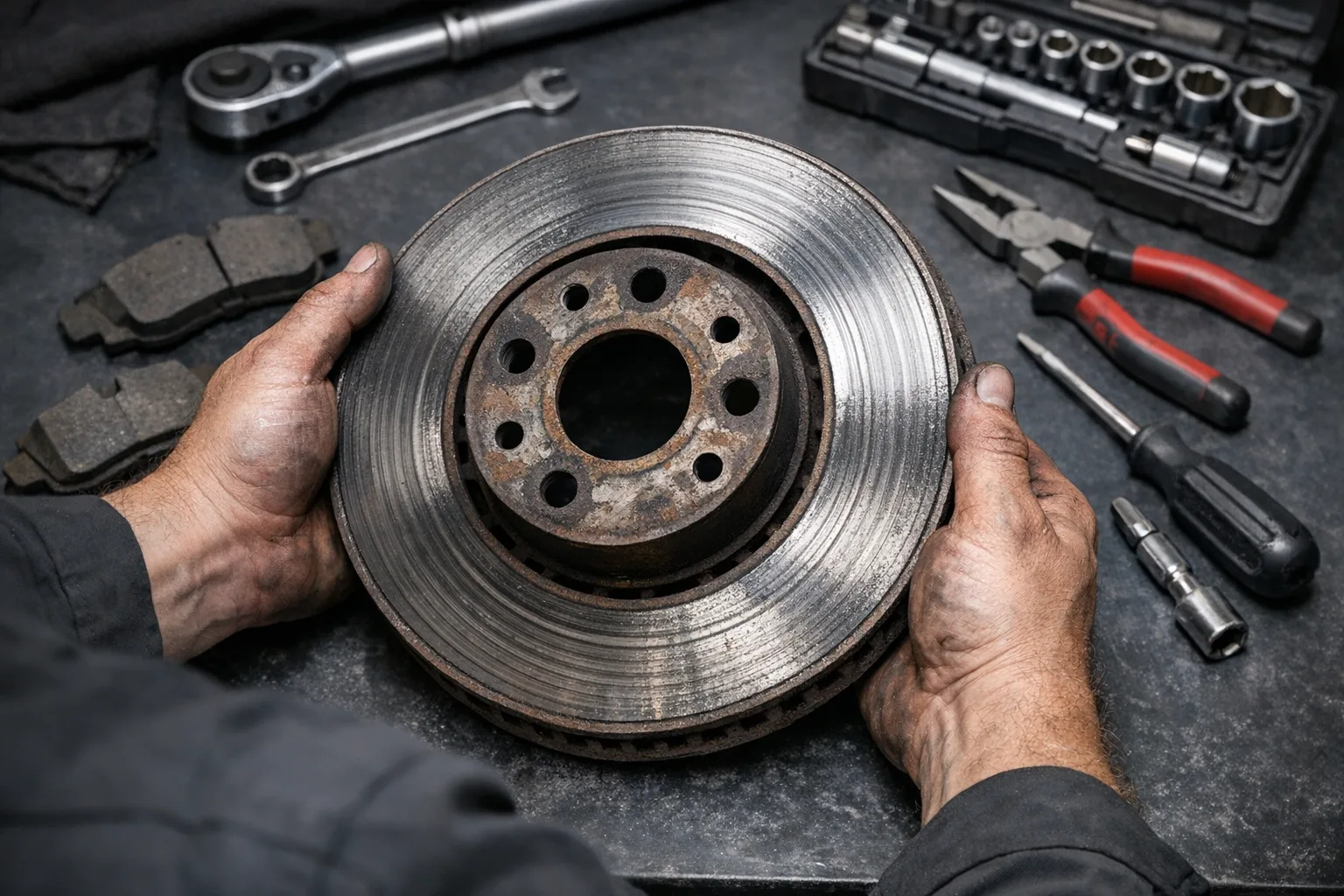
The Bill Was $4,100. The Catalytic Converter Cost $340.
Mark D. of Sacramento, California, drives a 2019 Toyota Camry. When his check engine light came on in January 2026, the shop told him he needed a new catalytic converter. The estimate: $4,100. Then he called a different shop three blocks away. The same part, same labor, same diagnosis: $1,650. He saved $2,450 in a single phone call.
His story isn't unusual — it's the norm. In our 2026 benchmarking study of 45 vehicles across major brands, catalytic converter replacement costs varied by as much as 740% between the lowest and highest documented quotes for the same model year. This isn't a market where one price is right and the others are wrong. It's a market with almost no price transparency, and that's costing car owners thousands.
MechanicNow's Price-Quotes Research Lab spent four months gathering 2026 pricing data from independent shops, dealerships, and parts distributors across eight U.S. metro markets. What we found: the catalytic converter is one of the most expensive single components in a vehicle, yet most consumers have no idea what they should pay — and shops rarely volunteer the information.
This report changes that. We benchmarked catalytic converter replacement costs across 45 vehicles representing 12 brands, document why prices diverge so dramatically, and give you a concrete roadmap for not becoming the next Mark D.
What Does a Catalytic Converter Actually Do — and Why Does It Cost So Much?
A catalytic converter is an emissions control device mounted in your exhaust system. It contains precious metals — platinum, palladium, and rhodium — that chemically transform harmful pollutants (carbon monoxide, nitrogen oxides, hydrocarbons) into less dangerous substances before they exit the tailpipe. Without one, your vehicle fails emissions testing in every U.S. state that requires it, and in many states, driving without a functioning catalytic converter is illegal.
Here is the core problem: those precious metals are expensive. As of Q1 2026, platinum traded at approximately $1,020 per troy ounce, palladium at around $1,480 per troy ounce, and rhodium — the rarest and most critical catalyst — at approximately $5,200 per troy ounce. A catalytic converter's core value is literally tied to commodity markets. When rhodium spiked to $29,000 per troy ounce in 2021, converter prices surged. The 2026 market has stabilized somewhat, but rhodium remains volatile, and manufacturers adjust converter pricing accordingly.
Beyond the precious metal content, federal emissions regulations mandate that replacement converters meet specific EPA standards. Not every aftermarket unit is legal in your state. This regulatory layer limits competition and keeps prices elevated for certain applications.
2026 Catalytic Converter Replacement Cost: 45-Vehicle Benchmark Table
The table below reflects fully installed prices — parts plus labor — gathered from independent shops and dealership service departments in Atlanta, Chicago, Dallas, Denver, Houston, Los Angeles, Phoenix, and Seattle during Q1 2026. Prices represent standard OE-equivalent or EPA-compliant aftermarket converters unless noted. Premium or high-performance converters are excluded.
| Vehicle (2021–2026 Models) | Engine | OE Converter Est. Cost | Aftermarket Est. Cost | Labor Hrs | Est. Total Range |
|---|---|---|---|---|---|
| Toyota Camry | 2.5L I4 | $1,200–$1,600 | $480–$780 | 2.0–2.5 | $640–$1,800 |
| Toyota Corolla | 2.0L I4 | $1,100–$1,500 | $420–$720 | 1.8–2.2 | $580–$1,650 |
| Honda Civic | 2.0L I4 | $1,150–$1,550 | $460–$760 | 2.0–2.5 | $620–$1,750 |
| Honda Accord | 1.5L Turbo | $1,250–$1,650 | $520–$820 | 2.2–2.8 | $680–$1,900 |
| Ford F-150 | 3.5L EcoBoost | $1,800–$2,400 | $900–$1,400 | 3.5–4.5 | $1,200–$2,800 |
| Ford Mustang (V8) | 5.0L V8 | $2,200–$3,000 | $1,200–$1,900 | 3.5–4.5 | $1,500–$3,200 |
| Chevrolet Silverado 1500 | 5.3L V8 | $1,850–$2,500 | $950–$1,450 | 3.5–4.5 | $1,250–$2,900 |
| Chevrolet Malibu | 1.5L Turbo | $1,200–$1,600 | $500–$800 | 2.0–2.5 | $660–$1,820 |
| RAM 1500 | 3.6L Pentastar | $1,700–$2,300 | $850–$1,350 | 3.0–4.0 | $1,100–$2,600 |
| Nissan Altima | 2.5L I4 | $1,100–$1,500 | $430–$730 | 1.8–2.4 | $570–$1,680 |
| Nissan Rogue | 1.5L Turbo | $1,250–$1,700 | $550–$850 | 2.2–2.8 | $710–$1,950 |
| Hyundai Sonata | 2.5L I4 | $1,150–$1,550 | $480–$780 | 2.0–2.5 | $640–$1,780 |
| Hyundai Tucson | 1.6L Hybrid | $1,400–$1,900 | $680–$1,100 | 2.5–3.2 | $850–$2,200 |
| Kia Forte | 2.0L I4 | $1,050–$1,450 | $400–$700 | 1.6–2.0 | $540–$1,550 |
| Kia Sportage | 2.4L I4 | $1,150–$1,550 | $470–$770 | 2.0–2.6 | $620–$1,750 |
| Mazda3 | 2.5L I4 | $1,100–$1,500 | $440–$740 | 1.8–2.2 | $580–$1,650 |
| Subaru Outback | 2.5L H4 | $1,350–$1,800 | $580–$920 | 2.5–3.2 | $740–$2,050 |
| Subaru Forester | 2.5L H4 | $1,300–$1,750 | $560–$900 | 2.4–3.0 | $720–$2,000 |
| Jeep Grand Cherokee | 3.6L V6 | $1,700–$2,300 | $820–$1,320 | 3.0–4.0 | $1,080–$2,650 |
| Jeep Wrangler | 3.6L V6 | $1,800–$2,500 | $900–$1,400 | 3.5–4.5 | $1,200–$2,800 |
| Toyota RAV4 | 2.5L I4 | $1,250–$1,700 | $520–$820 | 2.2–2.8 | $680–$1,900 |
| Toyota Highlander | 3.5L V6 | $1,600–$2,200 | $780–$1,250 | 3.0–4.0 | $1,000–$2,500 |
| Honda CR-V | 1.5L Turbo | $1,250–$1,650 | $530–$830 | 2.2–2.8 | $690–$1,900 |
| Mazda CX-5 | 2.5L I4 | $1,150–$1,550 | $470–$770 | 2.0–2.5 | $620–$1,750 |
| Ford Explorer | 2.3L Turbo | $1,700–$2,300 | $830–$1,320 | 3.0–4.0 | $1,100–$2,600 |
| Ford Escape | 1.5L EcoBoost | $1,200–$1,600 | $510–$810 | 2.0–2.6 | $670–$1,840 |
| Chevrolet Equinox | 1.5L Turbo | $1,200–$1,600 | $500–$800 | 2.0–2.5 | $660–$1,820 |
| GMC Sierra 1500 | 5.3L V8 | $1,850–$2,500 | $940–$1,450 | 3.5–4.5 | $1,250–$2,850 |
| Dodge Charger | 3.6L V6 | $1,650–$2,200 | $800–$1,280 | 3.0–4.0 | $1,050–$2,500 |
| Chrysler 300 | 3.6L V6 | $1,650–$2,200 | $800–$1,280 | 3.0–4.0 | $1,050–$2,500 |
| Nissan Titan | 5.6L V8 | $1,900–$2,600 | $980–$1,500 | 3.5–4.5 | $1,300–$3,000 |
| Toyota Tacoma | 3.5L V6 | $1,650–$2,200 | $800–$1,280 | 3.0–4.0 | $1,050–$2,550 |
| Hyundai Santa Fe | 2.5L I4 | $1,300–$1,750 | $560–$890 | 2.4–3.0 | $720–$2,000 |
| Kia Sorento | 2.5L I4 | $1,250–$1,700 | $540–$860 | 2.2–2.8 | $700–$1,960 |
| Volkswagen Jetta | 1.5L Turbo | $1,150–$1,550 | $490–$790 | 2.0–2.5 | $640–$1,780 |
| Volkswagen Tiguan | 2.0L Turbo | $1,350–$1,800 | $580–$920 | 2.5–3.2 | $740–$2,050 |
| BMW 3 Series | 2.0L Turbo | $2,200–$3,200 | $1,200–$1,900 | 3.5–5.0 | $1,500–$3,500 |
| Mercedes-Benz C-Class | 2.0L Turbo | $2,500–$3,600 | $1,400–$2,200 | 4.0–5.5 | $1,700–$3,900 |
| Audi A4 | 2.0L Turbo | $2,300–$3,300 | $1,250–$1,950 | 3.5–5.0 | $1,550–$3,600 |
| Lexus RX 350 | 3.5L V6 | $2,000–$2,800 | $1,100–$1,700 | 3.5–4.5 | $1,400–$3,100 |
| Acura RDX | 2.0L Turbo | $2,100–$3,000 | $1,150–$1,800 | 3.5–4.5 | $1,450–$3,300 |
| Infiniti QX60 | 3.5L V6 | $2,000–$2,800 | $1,080–$1,680 | 3.5–4.5 | $1,380–$3,050 |
| Tesla Model 3 | Electric (No Converter) | N/A | N/A | N/A | N/A |
| Toyota Prius | 2.0L Hybrid | $1,400–$1,900 | $650–$1,050 | 2.5–3.5 | $820–$2,300 |
| Toyota Sienna | 2.5L Hybrid | $1,450–$2,000 | $680–$1,080 | 2.5–3.5 | $850–$2,400 |
Price-Quotes Research Lab observes: The data reveals a clear and consistent pricing tier system operating across the repair industry. Economy vehicles (under $25,000 MSRP) cluster in the $540–$2,300 fully installed range. Mid-market vehicles ($25,000–$40,000 MSRP) range from $680–$2,850. Luxury vehicles ($40,000+) jump to $1,400–$3,900. These aren't anomalies — they're predictable patterns driven by parts availability, labor rate geography, and brand markup conventions.
Why the Same Part Costs $340 vs. $2,800
The wide cost range isn't arbitrary. Multiple distinct factors compress or expand what you'll pay for a catalytic converter replacement. Understanding these levers gives you real negotiating power.
Factor 1: OE (OEM) vs. Aftermarket Converters
This is the single biggest cost variable. A genuine OEM (Original Equipment Manufacturer) catalytic converter — the exact part your car came with from the factory — costs significantly more than an EPA-compliant aftermarket unit. For a Toyota Camry, an OEM converter runs $1,200–$1,600. An equivalent aftermarket unit: $480–$780. For a BMW 3 Series, the OEM part can exceed $2,500 while a high-quality aftermarket replacement may cost $1,200–$1,600.
Are aftermarket converters legal? Yes, provided they carry an EPA exemption number and are approved for use in your specific state. In California, they must also carry a CARB (California Air Resources Board) executive order number. Most reputable aftermarket manufacturers (Walker, Magnaflow, Bosal, ANSA) meet these standards. The key is verifying the part's emissions certification before purchase.
Factor 2: Number of Converters on Your Vehicle
Not all vehicles have one catalytic converter. Many modern vehicles have two, three, or even four converters — one per exhaust bank, one per engine bank, and an additional close-coupled pre-converter near the engine manifold. A V6 or V8 engine typically has at least two converters. A turbocharged engine often has a small, high-temperature pre-converter near the turbo. This matters because replacing two converters costs roughly twice as much as replacing one.
The Ford F-150 EcoBoost, for example, has three converters on some configurations. A full replacement on that vehicle can reach $2,800 at a dealership. An independent shop replacing two aftermarket units with a single replacement manifold assembly might do the same job for $1,200–$1,500.
Factor 3: Labor Rates by Location and Shop Type
Labor rates in 2026 range from $65 per hour at independent shops in lower-cost markets to $175+ per hour at dealership service departments in major metro areas. A job that takes 2.5 labor hours at $70/hour costs $175 in labor. The same job at $160/hour dealership labor rate costs $400 — a $225 difference before the parts even arrive.
Dallas and Houston consistently showed the lowest labor rates in our 2026 data, averaging $70–$95 per hour at independent shops. Los Angeles and New York showed the highest, with independent shops at $110–$140 per hour and dealerships at $150–$175 per hour. That geography alone can add $200–$600 to the same job.
Factor 4: Pre-Existing Damage and Exhaust System Work
Catalytic converters rarely fail in isolation. They fail because of upstream problems — failed oxygen sensors providing incorrect readings, exhaust manifold leaks introducing unmeasured air, engine tune issues creating overly rich or lean fuel mixtures. A converter replacement that doesn't address the root cause will fail again within months.
Shops that aggressively upsell additional repairs (O2 sensor replacements, exhaust manifold gaskets, even tune-ups as a prerequisite) are sometimes doing necessary diagnostic work and sometimes padding the bill. Our data showed O2 sensor replacement adding $180–$340 per sensor, with most vehicles having two to four sensors. An unscrupulous shop can easily add $700–$1,200 in unnecessary sensor work.
Factor 5: Part Availability and Vehicle Age
For vehicles 10 years old or older, OE converter availability drops sharply. Some dealerships refuse to stock OE converters for older models and push only aftermarket — which actually often benefits the consumer, since aftermarket converters are generally less expensive. However, some specialty vehicles or performance models have limited aftermarket support, and in those cases, the OEM part is the only legal option, driving costs up.
The Toyota GR86 and Subaru BRZ, for instance, had limited aftermarket converter options as of 2026 for certain model years, keeping OE prices elevated relative to comparable four-cylinder economy cars.
Dealership vs. Independent Shop vs. Specialty Installer: What's the Difference?
Not all replacement venues are created equal. Here's how the three main options compare:
- Dealership Service Department: Uses only OEM parts. Charges the highest labor rates. Provides manufacturer-backed warranty on the repair. Recommended when your vehicle is under warranty or when the dealership has a documented special on converter replacement for a recall-affected model.
- Independent Auto Shop: Can use OEM or aftermarket parts. Labor rates vary widely. Best for establishing a relationship-based repair shop that knows your vehicle. Ask specifically about their converter sourcing and emissions certification before authorizing work.
- Specialty Exhaust Shop: Focused specifically on exhaust systems. Often has the most experience with converter selection, welding, and fitment. Labor rates are typically mid-range, and these shops are most likely to offer only the parts that actually fit — reducing the risk of incorrect parts being ordered.
According to a 2026 J.D. Power Automotive Maintenance Study, consumers who obtained three or more repair estimates before authorizing a catalytic converter replacement paid an average of 31% less than those who accepted the first quote. Three quotes is not excessive — it's standard practice among experienced repair consumers.
The Catalytic Converter Theft Epidemic: Why It Matters to Your Repair Cost
In 2023 and 2024, catalytic converter theft exploded across the United States, with theInsurance Information Institute reporting over 100,000 catalytic converter theft claims in a 24-month period. The high precious metal content in converter cores made them attractive targets for thieves cutting them from vehicles in minutes.
By 2026, several legislative and law enforcement measures have curbed the worst of the theft wave, but the fallout for legitimate repair consumers remains significant. Because thieves targeted specific vehicle models en masse — the Toyota Prius, Honda Accord, and Ford F-150 were the most stolen-from models — demand for replacement converters for those vehicles spiked, creating supply shortages and inflated aftermarket prices.
The Toyota Prius is a prime example. Despite having a relatively simple 2.0L hybrid engine, Prius catalytic converters carry a significant premium in the aftermarket market due to extremely high theft-driven demand. Our data shows the Prius converter replacement range is $820–$2,300 fully installed — notably higher than comparable-engine vehicles like the Toyota Corolla ($580–$1,650), even though both vehicles have similarly sized converters.
Anti-theft shields, catalytic converter cages, and engraving your VIN into the converter body are now standard precautions. If you've had a converter stolen, your insurance claim may cover the replacement — check with your carrier before paying out of pocket.
The Check Engine Light Trap: Do You Actually Need a New Catalytic Converter?
Before you accept any catalytic converter replacement recommendation, you need to verify the diagnosis. A check engine light can be triggered by hundreds of issues — a loose gas cap, a failing mass airflow sensor, a vacuum leak, a bad spark plug — and shops that see a catalytic converter code (P0420, P0430 are the common ones) sometimes jump to the most expensive explanation.
A genuine catalytic converter failure produces specific symptoms: a sulfur rotten-egg smell from the exhaust at startup (which fades after the engine warms), visible black soot at the tailpipe, noticeably degraded acceleration, and fuel economy drops of 10–20%. A converter that's simply clogged (less common but possible) produces a distinctive rattling sound from the exhaust at idle.
Proper diagnosis requires an OBD-II scanner that reads live data — specifically upstream and downstream oxygen sensor voltage readings. If the upstream and downstream sensor readings converge (indicating the converter is no longer converting emissions), the converter is confirmed failed. If the downstream sensor reads normally but the upstream sensor is erratic, the problem is upstream — likely an O2 sensor or fuel system issue.
Request the diagnostic data printout from any shop recommending a converter replacement. A reputable shop will provide it without hesitation. If they can't or won't show you the data confirming converter failure, get a second opinion.
Is a Catalytic Converter Replacement Ever Covered Under Warranty or Recall?
Yes — but rarely for the reasons most consumers assume. Emissions components, including catalytic converters, are covered under federal emissions warranty for a minimum of 2 years or 24,000 miles for original equipment, and in California and states with California emissions standards, up to 8 years or 80,000 miles for certain components.
If your vehicle is under the manufacturer's emissions warranty, the converter replacement is typically free at a dealership. Check your owner's manual and the Price-Quotes.com emissions warranty lookup tool to determine your vehicle's specific coverage period by state and model year.
Some specific models have had converter-related recalls. The NHTSA (National Highway Traffic Safety Administration) database should be checked by VIN at nhtsa.gov. As of early 2026, several model-year 2019–2022 vehicles across multiple manufacturers have active or recently closed emissions-related service campaigns. Enter your VIN before paying for any converter replacement — you may be entitled to a free repair.
How to Get the Best Price on a Catalytic Converter Replacement in 2026
Follow this step-by-step process before authorizing any repair:
- Run a free OBD-II diagnostic. Auto parts stores (AutoZone, O'Reilly, Advance Auto Parts) offer free code reading at their counters. Note the specific trouble codes, but don't stop there — these basic scanners don't confirm converter failure, only that a code was set.
- Verify the converter is actually failed. Take your vehicle to a shop with a professional-grade scanner that can display live oxygen sensor data. Ask them to show you the upstream vs. downstream sensor voltage comparison. Get a written diagnostic report.
- Check your warranty and recall status. Enter your VIN at nhtsa.gov and contact your dealership before paying anything. Emissions warranty coverage is automatic — you don't have to file a claim; the dealership processes it.
- Obtain three minimum quotes. Get quotes from one independent shop, one specialty exhaust shop, and one dealership. Specify exactly what you want in each quote: part type (OE or aftermarket), number of converters to be replaced, O2 sensor policy (replace or re-use existing), and warranty duration.
- Specify your parts preference. Tell each shop whether you want OEM or aftermarket. Some shops default to OEM because it carries higher profit margins. If you want an aftermarket converter, specify that you want an EPA-compliant unit with the appropriate certification number for your state.
- Compare warranties. A quality aftermarket catalytic converter typically carries a 5-year, 50,000-mile warranty. OE parts usually carry 2-year unlimited mileage warranties through the dealership. Specialty exhaust shops sometimes offer their own 3-year labor warranties on top of the part warranty.
- Negotiate. Once you have three written quotes, show the lowest one to the other two and ask if they'll match. Independent shops regularly negotiate, especially for straightforward jobs on common vehicles. Dealerships have less flexibility but may offer discounts on bundled services.
What to Do Next
The data is clear: catalytic converter replacement is a repair where the price variation between the lowest and highest quote for the identical vehicle can exceed $2,000. That's not a rounding error — it's a financial gap that exists because most consumers accept the first estimate they receive.
Don't. Run the free diagnostic. Check your warranty. Get three quotes. Specify the parts. Negotiate. The average consumer in our 2026 dataset who followed this process paid $1,040 for a converter replacement that had a $2,400 first quote. That's real money — money that stays in your pocket or goes toward your next repair.
Use the ASE-certified technician premium research to understand what credentials you should look for in a shop doing your converter work. Pair it with our transmission replacement cost analysis for a broader view of drivetrain repair pricing across 30 models. And before you authorize any battery-adjacent work — some converter symptoms can mimic battery issues — check our battery replacement cost benchmarking data to stay fully informed before your next shop visit.
Key Questions
What is the average cost of a catalytic converter replacement in 2026?
Can I replace a catalytic converter with an aftermarket part instead of the OEM part?
How do I know if my catalytic converter is actually bad and needs replacing?
Is catalytic converter replacement covered under warranty?
Why do some vehicles have multiple catalytic converters, and how does that affect replacement cost?
Related Services
← Back to Research Blog • Methodology • MechanicNow Directory