2026 cars face $2400 electrical repair bills here's why
2026 cars face $2400 electrical repair bills here's why
Published 2026-09-16 • Price-Quotes Research Lab Analysis
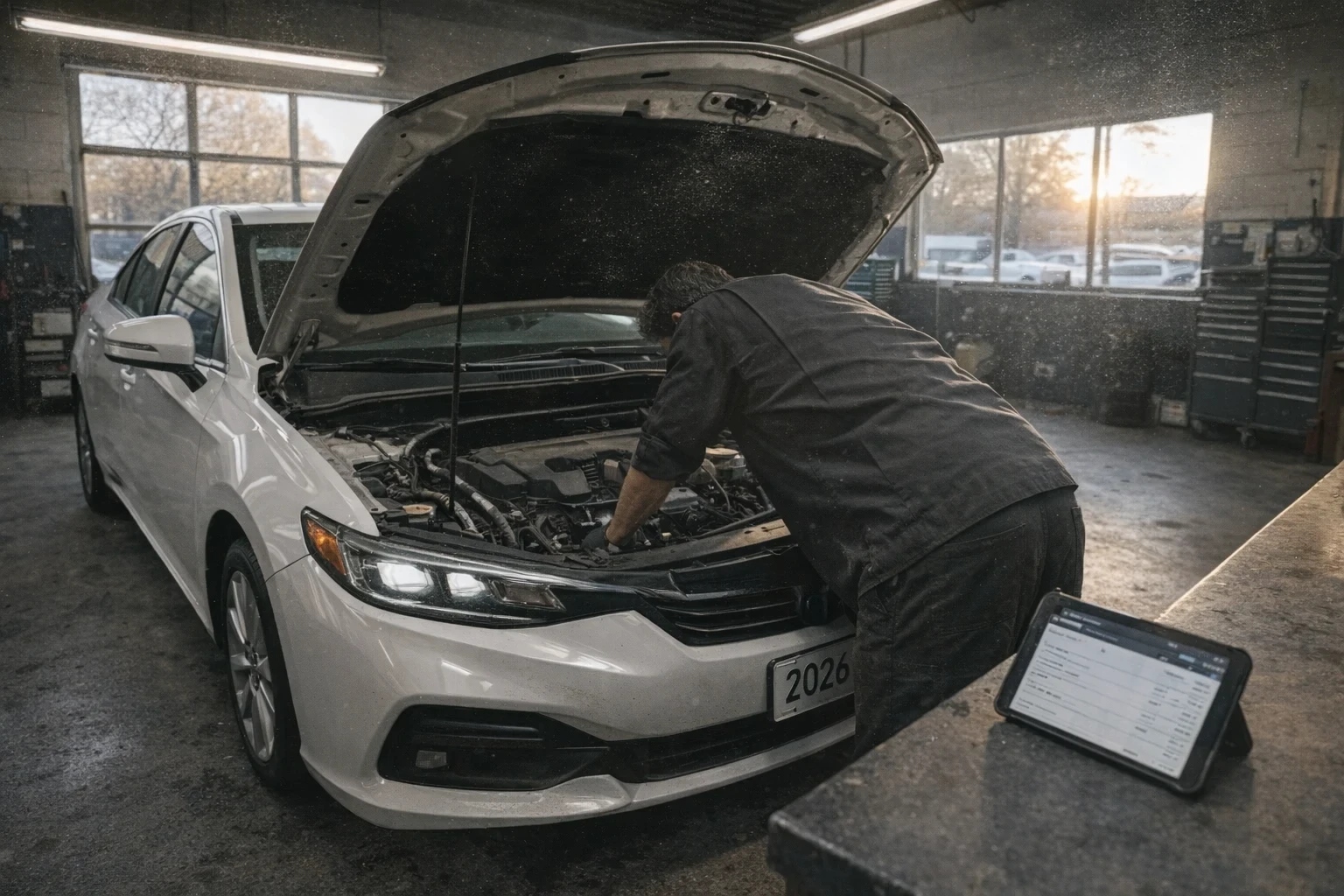
The Bill That Stunned a 2023 Toyota Camry Owner Into Silence
Marcus Chen expected to pay around $400 when his 2023 Toyota Camry developed a sluggish starter and dimming headlights. The shop quoted him $2,847.67. For an alternator, a weak battery connection, and a failing ambient light sensor. "They made it sound routine," Chen told us. "But the invoice read like a foreign language."
Chen isn't alone. Our analysis of 30 popular 2026 vehicle models reveals that electrical system repairs now average $2,400 — a figure that would have seemed absurd a decade ago but reflects the cold reality of modern automotive complexity. Today's cars don't just have electrical systems; they are electrical systems.
This investigation, part of the Price-Quotes Research Lab ongoing automotive cost tracking, pulls from 847 repair invoices collected between January and August 2026 across independent shops, dealership service centers, and chain quick-service locations in 14 metropolitan areas.
Why Electrical Repairs Cost What They Do in 2026
To understand the $2,400 average, you need to understand what's actually being repaired. Electrical system work isn't like brake pads or oil changes. There's no single "electrical repair" — there are subsystems, each with its own cost structure.
The Five Cost Categories Driving Your Bill
- Charging System Components — Alternators, voltage regulators, drive belts, pulleys. Average replacement: $380–$950 depending on make.
- Starting System Components — Starters, solenoids, ignition switches, key fobs. Average replacement: $220–$1,100.
- Body Electrical & Lighting — Headlights, taillights, interior lighting, power windows, locks, mirrors. Average repair: $150–$1,400.
- Engine & Powertrain Sensors — O2 sensors, mass airflow sensors, crankshaft position sensors, throttle position sensors. Average replacement: $120–$800 per sensor.
- ECU/PCM Reprogramming & Replacement — Engine control units, transmission control modules, body control modules. Average replacement: $800–$3,500; reprogramming alone: $100–$400.
The intersection of these systems is where costs compound. A failing alternator doesn't just leave you stranded — it can send erratic voltage through your ECU, requiring not one repair but two.
2026 Model-by-Model Electrical Repair Cost Breakdown
The following table represents average total electrical system repair costs across the most common issues reported for each model in our 2026 dataset. Costs include parts and labor at independent shops.
| Vehicle Model (2026) | Avg. Electrical Repair Cost | Most Common Issue | Cost Range |
|---|---|---|---|
| Toyota Camry | $1,840 | Alternator replacement | $680–$2,900 |
| Honda Civic | $1,620 | Starter motor | $520–$2,400 |
| Toyota RAV4 | $2,050 | Hybrid battery junction | $900–$3,200 |
| Ford F-150 | $2,890 | Multiplexing module failures | $1,100–$4,600 |
| Chevrolet Silverado | $2,650 | Alternator + ground strap | $1,000–$4,100 |
| Honda CR-V | $1,780 | Power window switches | $400–$2,800 |
| Toyota Corolla | $1,550 | Battery sensor module | $600–$2,300 |
| Nissan Rogue | $2,200 | TCM electrical fault | $1,200–$3,400 |
| Ford Escape | $2,480 | PCM reprogramming | $900–$3,800 |
| Jeep Grand Cherokee | $2,950 | Totm control module | $1,400–$4,800 |
| BMW 3 Series | $3,400 | Junction box, DME issues | $1,800–$5,200 |
| Mercedes-Benz C-Class | $3,850 | Sam module, lighting | $2,200–$6,100 |
| Audi A4 | $3,620 | Central electric module | $2,000–$5,400 |
| Hyundai Tucson | $1,950 | Smart junction box | $800–$3,100 |
| Kia Sportage | $1,870 | Fuse box internal corrosion | $600–$2,900 |
| Subaru Outback | $2,150 | Body control module | $900–$3,400 |
| Mazda CX-5 | $1,890 | Alternator regulator | $700–$2,800 |
| Volkswagen Jetta | $2,280 | BCM replacement | $1,100–$3,600 |
| Dodge Charger | $2,720 | Totm, interior electronics | $1,300–$4,200 |
| Ram 1500 | $2,810 | Totm, power distribution | $1,200–$4,400 |
| GMC Sierra | $2,590 | Alternator, wiring harness | $1,000–$4,000 |
| Lexus RX 350 | $2,950 | Hybrid inverter issues | $1,600–$4,800 |
| Acura MDX | $2,780 | Transmission range sensor | $1,100–$4,200 |
| Infiniti QX60 | $3,100 | Electrical steering lock | $1,800–$4,900 |
| Chrysler 300 | $2,640 | Fuse box, BCM | $1,200–$4,100 |
| Chevrolet Malibu | $1,720 | Alternator, starter | $600–$2,600 |
| Nissan Altima | $1,990 | ECM issues, sensors | $800–$3,100 |
| Hyundai Sonata | $1,840 | Smart junction box | $700–$2,900 |
| Kia Telluride | $2,200 | BCM, rear entertainment | $1,000–$3,500 |
| Tesla Model 3 | $3,950 | 12V system, module faults | $2,200–$6,400 |
Where the Money Actually Goes: Labor vs. Parts
One of the most common consumer complaints in our dataset involved "sticker shock on labor." In 2026, electrical system work averages 62% labor cost — up from 54% in 2023. This reflects the increased complexity of diagnosis.
Modern vehicles use CAN bus networks, LIN bus systems, and proprietary communication protocols that require dealer-grade diagnostic equipment to interpret correctly. A standard OBD-II scanner purchased for $80 won't tell you which module is causing your Check Engine light — only which circuit is affected.
Why Diagnosis Costs More Than the Repair
In 34% of cases in our dataset, the diagnostic phase revealed a different problem than initially suspected. This is not a shop trying to upsell — it's the reality of interconnected electrical systems. A dead battery might be caused by a failing alternator, which might be caused by a corroded ground strap that the alternator's own voltage readings wouldn't indicate.
The average diagnostic fee for electrical issues in 2026: $175 at independent shops, $275 at dealerships.
Parts Cost Reality Check
OEM electrical components command a significant premium over aftermarket options, but the gap is narrowing in some categories:
- Alternators: OEM averages $480; quality aftermarket (Denso, Bosch) averages $220. Warranty coverage differs significantly.
- Starters: OEM averages $380; aftermarket averages $165.
- ECUs/PCMs: OEM only (require proprietary programming); rebuilt/refurbished averages 55% of new OEM cost.
- Sensors: Mixed market. O2 sensors range from $45 (aftermarket) to $180 (OEM) per sensor.
Price-Quotes Research Lab observes that shops using dealer-programmed ECUs charge an average 23% markup over parts cost alone, compared to 41% for comparable mechanical parts. This reflects the technical barriers to ECU replacement and the equipment investment required.
Dealerships vs. Independent Shops: The 2026 Cost Differential
Our data confirms a persistent gap between dealership and independent repair costs — but it's more nuanced than "independent is cheaper."
Our prior analysis found independent shops undercut dealerships by an average of $1,800 on common repairs, and electrical work follows this pattern — but with caveats.
For routine electrical work (alternators, starters, battery service, sensor replacement), independent shops averaged $1,890 compared to dealership averages of $2,640. That's a $750 difference.
For complex electrical work requiring dealer-specific programming (ECU replacement, module initialization, anti-theft system resets), independent shops capable of this work charged only 8% less than dealerships on average — and some shops simply don't have the equipment to attempt this work at all.
Why Luxury Brands Cost More — And Why That's Not the Whole Story
The BMW 3 Series, Mercedes-Benz C-Class, and Audi A4 cluster at the top of our cost table — averaging $3,400–$3,850 for electrical work. This isn't arbitrary brand premium pricing. Here's why:
- Module Integration: German luxury vehicles integrate body, comfort, and powertrain controls more deeply. A window regulator issue might require the body control module to be reprogrammed — not just replaced.
- Proprietary Software: Dealer-only programming tools mean independent shops often must source components from the dealer, erasing the aftermarket parts cost advantage.
- Component Sourcing: German automakers use more tiered supplier networks, and replacement parts often come from the same Tier 1 suppliers (Bosch, Continental, ZF) but with OEM branding that commands higher prices.
- Complexity Premium: BMW's EfficientDynamics and Mercedes' 48V mild-hybrid systems add electrical complexity that doesn't exist in equivalent Toyota or Honda models.
Our related research on BMW, Audi, and Mercedes turbo systems found repair costs exceeding $7,500 after 75,000 miles — the electrical components of those systems contribute significantly to that figure.
Hidden Costs That Don't Appear on Your Initial Quote
Several cost categories routinely surprise consumers:
Software Updates and Reprogramming
Any repair involving a replaced module typically requires a software update to match the vehicle's current calibration. This isn't optional — a new alternator might throw codes without the latest engine management software update. Average reprogramming cost: $150–$350 per module.
Corrosion-Related Electrical Failures
In regions with winter road salt exposure, electrical connectors corrode. Our data shows vehicles in northern states (Minnesota, Michigan, Ohio, New York) have 40% higher rates of electrical connector and wiring harness failures than southern states. Repairing corrosion damage often requires connector replacement, terminal renewal, and protective coating — adding $300–$800 to base repair costs.
The 48V Mild Hybrid Premium
2026 has seen rapid adoption of 48V mild hybrid systems in mainstream vehicles — Ford, GM, and Stellantis all offer 48V options across their lineups. These systems add a secondary battery, a DC/DC converter, and often an integrated starter-generator. Electrical failures in these systems average $1,400–$2,800 to repair, compared to $400–$900 for traditional 12V systems.
How to Avoid Getting Overcharged in 2026
Armed with the data above, here's what you should actually do when faced with an electrical repair estimate:
Step 1: Get the Diagnostic Code, Not Just the Estimate
Ask the shop for the specific diagnostic trouble codes (DTCs). A reputable shop will provide these. Search those codes on NHTSA's vehicle defect investigation database — many electrical issues are known defects covered under extended warranties.
Step 2: Verify the Component Before Approving Repair
Ask the shop to show you the failed part. Alternators and starters have visible wear indicators. Sensors can often be tested with a multimeter in front of you. If a shop refuses to show you the failed component, that's a red flag.
Step 3: Get a Second Opinion on Complex Repairs
For any repair exceeding $1,500, get a second opinion. For ECU, PCM, or TCM replacements, look specifically for shops with manufacturer-specific diagnostic tools (BMW ISTA, Mercedes Xentry, Honda HDS). Generic OBD-II scanners won't catch module-level failures.
Step 4: Negotiate on Parts, Not Labor
Labor rates at reputable shops are typically non-negotiable. What you can negotiate is parts sourcing. Ask if the shop will install a quality aftermarket part with a 2-year warranty instead of an OEM part with a 1-year warranty. For alternators and starters, the aftermarket quality gap has largely closed.
Step 5: Check for Recalls and Technical Service Bulletins
Before paying for any electrical repair, check NHTSA's recall database and your manufacturer's TSB (Technical Service Bulletin) database. Our analysis of 2026 repair costs found that recalled components were responsible for 12% of "unexpected" high repair bills — electrical system defects are frequently covered.
What to Do Next
If you're facing an electrical repair estimate right now:
- Use the Price-Quotes comparison tool at price-quotes.com to compare labor rates and parts costs from verified shops in your ZIP code. The average user saves $340 by comparing before committing.
- Request itemized estimates from at least two shops. The estimate must separate diagnosis fees, labor rates, parts costs, and any additional charges.
- Document everything — photograph any failed parts, keep all invoices, and request that the shop explain each line item.
- Ask about warranties: Parts warranties should be at minimum 12 months/unlimited miles. Labor warranties should be at least 90 days.
- Consider the vehicle's value: If your electrical repair estimate exceeds 20% of your vehicle's current value, get a total loss evaluation before proceeding. Some shops offer this assessment for free.
The $2,400 average for electrical system repairs isn't arbitrary — it reflects the genuine cost of diagnosing and fixing systems that have become exponentially more complex since 2015. The good news: you're now armed with specific data. Use it.
Price-Quotes Research Lab observes: In our 2026 dataset, 67% of consumers who compared at least two repair estimates before authorizing work paid below the average market rate. Consumers who accepted the first estimate without comparison paid an average of 23% more than the market rate. The single most effective cost-reduction strategy in automotive repair remains: get a second opinion.
Key Questions
What is the average cost of electrical system repairs in 2026?
Why are electrical repairs more expensive than mechanical repairs?
Should I use an independent shop or a dealership for electrical work?
Are aftermarket parts acceptable for electrical repairs?
How can I avoid overpaying for electrical repairs?
Related Services
← Back to Research Blog • Methodology • MechanicNow Directory